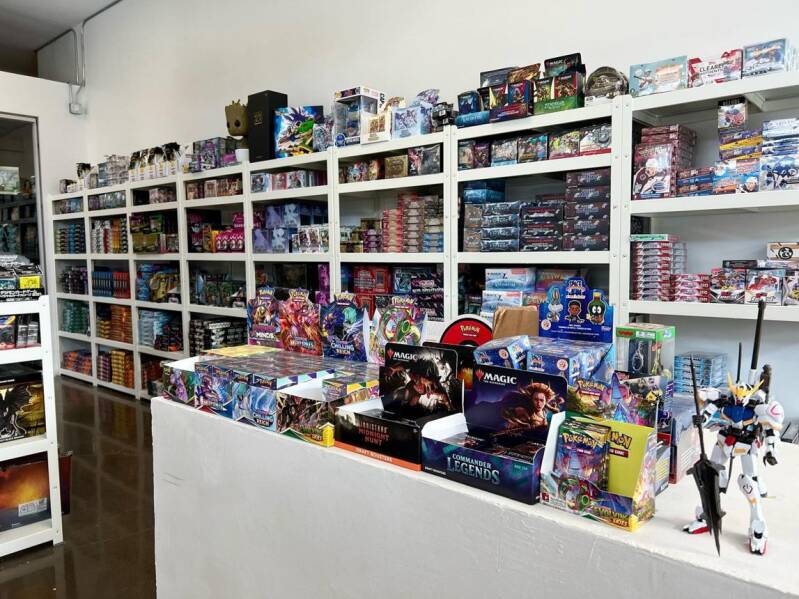
When I first worked on a planogram project for a trading card retailer, I thought it would be a straightforward exercise in organizing products. Sort the SKUs, map the shelves, make everything look clean and logical. But the deeper I got into the project, the more I realized this wasn’t just about placement. It was about behavior. The way customers move, what they notice, what they ignore, and most importantly, what actually makes them stop and buy.
Trading card stores are one of the purest environments to observe retail psychology in action. Unlike big-box retail, customers don’t walk in with a strict shopping list. They come in to browse, to hunt, to discover something. That changes everything. It means your layout isn’t just guiding purchases, it’s creating them.
During the project, one of the first challenges was SKU density. Hundreds of products, many of them visually similar, competing for attention in a relatively small space. The initial instinct might be to display as much as possible, to show the full assortment. But what I saw quickly was that too much choice doesn’t increase engagement, it kills it. When every shelf looks the same, nothing stands out. Customers skim instead of stopping.
That’s where the idea of visual hierarchy became real, not just theoretical. Certain products needed to act as anchors. High-demand packs, recognizable brands, or higher-margin items had to be placed where the eye naturally lands first. Eye-level wasn’t just a guideline, it became a strategic weapon. Once those anchor products did their job, the surrounding items started performing better simply by association.

Another thing the project made clear was how important “stop zones” really are. In most stores, there are natural points where customers pause without even realizing it. Near the entrance, at transitions between sections, or where aisles open up. In the trading card store, these areas were gold. When we positioned key products in those zones, engagement noticeably improved. Not because the products changed, but because we finally matched placement with human behavior.
It also challenged how I thought about duplication. Normally, repeating products across multiple areas might seem redundant or inefficient. But in this case, it was necessary. Customers don’t walk the store in a perfect path. They bounce around, double back, skip sections. By placing key items in multiple high-visibility spots, we increased the chances of interaction without relying on a single “perfect” location.
One of the biggest takeaways, though, was how emotional this type of retail really is. Trading cards aren’t just products, they’re tied to nostalgia, excitement, and the thrill of finding something valuable. That means merchandising has to support that feeling. It’s not just about making things easy to find, it’s about making discovery feel natural and rewarding. When the layout flows correctly, customers stay longer, engage more, and ultimately spend more without feeling pushed.
By the end of the project, I stopped looking at the store as a collection of shelves and started seeing it as a system of influence. Every decision, from product height to spacing to adjacency, either worked with or against the way people naturally shop. And once you understand that retail stops being about stocking products and starts becoming about shaping behavior.
That trading card store didn’t just improve its layout. It changed the way I approach every retail environment. Because no matter what you’re selling, the psychology stays the same.
What that project ultimately showed me is that most retailers aren’t struggling because they lack products, they’re struggling because they don’t fully understand how their customers behave inside the store. The difference between a store that looks “organized” and one that actually converts comes down to how well the layout aligns with real human behavior.
If you’re looking at your store and wondering why certain products aren’t moving, it’s usually not the product itself. It’s where it lives, what surrounds it, and whether it ever truly gets seen in the first place.
That’s the gap I focus on closing.
Add comment
Comments