How store leadership has transformed over the past decade — and what retail managers must do to stay competitive today

Modern retail leadership now blends in-store execution with real-time data insights, digital fulfillment coordination, and technology-driven decision making.
Retail store management in 2026 looks dramatically different than it did just ten years ago. What was once a role focused mainly on merchandising standards, staffing schedules, and hitting daily sales targets has evolved into something far more strategic and technology-driven. Today’s store managers are expected to operate as operational leaders, customer experience designers, and data interpreters all at once. The shift has been gradual, but its impact has been profound, reshaping how retail businesses function at the ground level.
From Operational Execution to Strategic Leadership
A decade ago, retail success at the store level was largely determined by execution consistency. Managers focused heavily on shelf replenishment, visual merchandising compliance, shrink control, and staff supervision. While these fundamentals still matter, they are no longer enough on their own. Modern store leadership requires a deeper understanding of market positioning, localized merchandising strategies, and real-time performance analytics.
Retail managers today must make faster and more informed decisions than ever before. Store performance is now measured not only by in-store sales but also by fulfillment speed, online order accuracy, customer satisfaction metrics, and digital engagement indicators. This broader performance scope has elevated the role of store management from operational oversight to business leadership.
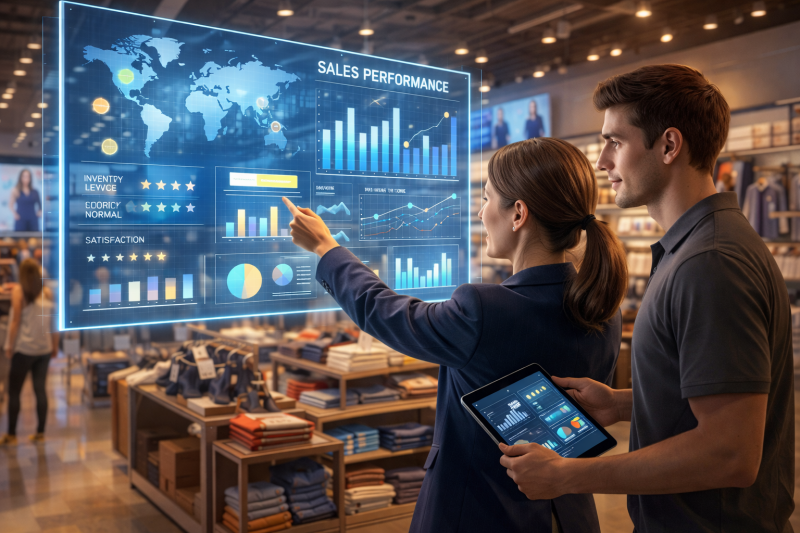
Store managers in 2026 rely heavily on performance dashboards, predictive analytics, and AI-enabled tools to optimize inventory, staffing, and customer experience outcomes.
The Omnichannel Revolution and the Blended Store Experience
One of the most significant forces reshaping store management has been the rise of omnichannel retail. Customers now expect a seamless journey between digital browsing and physical shopping. Services such as buy-online-pick-up-in-store, curbside fulfillment, and same-day delivery have transformed stores into hybrid logistics hubs as well as experiential retail environments.
This evolution has created both opportunity and complexity. On the positive side, omnichannel strategies drive higher overall customer spending and increase brand loyalty. However, they also introduce operational challenges such as inventory synchronization, staffing allocation for fulfillment tasks, and the need for flexible store layouts that accommodate both shoppers and order pickers.

Omnichannel retail operations such as buy-online-pick-up-in-store have transformed physical stores into hybrid shopping and fulfillment hubs.
Technology as a Core Management Tool
Technology adoption has accelerated at an unprecedented pace. Artificial intelligence tools, predictive inventory systems, and advanced analytics dashboards are now part of everyday retail decision-making. These tools help managers forecast demand more accurately, optimize labor deployment, and personalize customer engagement strategies.
The benefits are clear. Stores can reduce stockouts, improve margin performance, and react more quickly to emerging trends. Yet the increased reliance on technology also demands new skills. Store managers must now develop digital fluency and analytical confidence, bridging the gap between traditional retail instincts and data-driven decision-making.
Customer Expectations in the Experience Economy
Today’s retail customers are more informed, more connected, and more selective than ever before. Social media trends, influencer marketing, and digital price transparency have dramatically changed shopping behavior. Younger generations in particular expect stores to deliver engaging, convenient, and personalized experiences.
As a result, store managers must think beyond product placement and pricing strategy. They must consider store storytelling, visual flow, community relevance, and experiential touchpoints that encourage customers to stay longer and spend more. Retail spaces are increasingly becoming brand environments rather than simple transaction centers.
The Good, the Bad, and the Reality of Retail in 2026
The transformation of retail store management brings clear advantages. Managers have access to stronger tools, better data, and more strategic influence than their counterparts a decade ago. Store roles are becoming more dynamic and impactful, offering opportunities for innovation and leadership growth.
At the same time, the pace of change can create pressure. Constant adaptation, rising performance expectations, and operational complexity can make the role more demanding. Stores that struggle to balance technology adoption with human-centered service risk losing their competitive edge.
Ultimately, the reality of managing a retail store in 2026 is defined by agility. Success depends on the ability to integrate traditional retail fundamentals with modern digital capabilities. The stores that thrive will be those led by managers who can translate data into action, inspire their teams, and continuously evolve alongside changing consumer expectations.
Retail management is no longer just about maintaining standards. It is about shaping the future of how physical stores create value in an increasingly connected retail landscape.
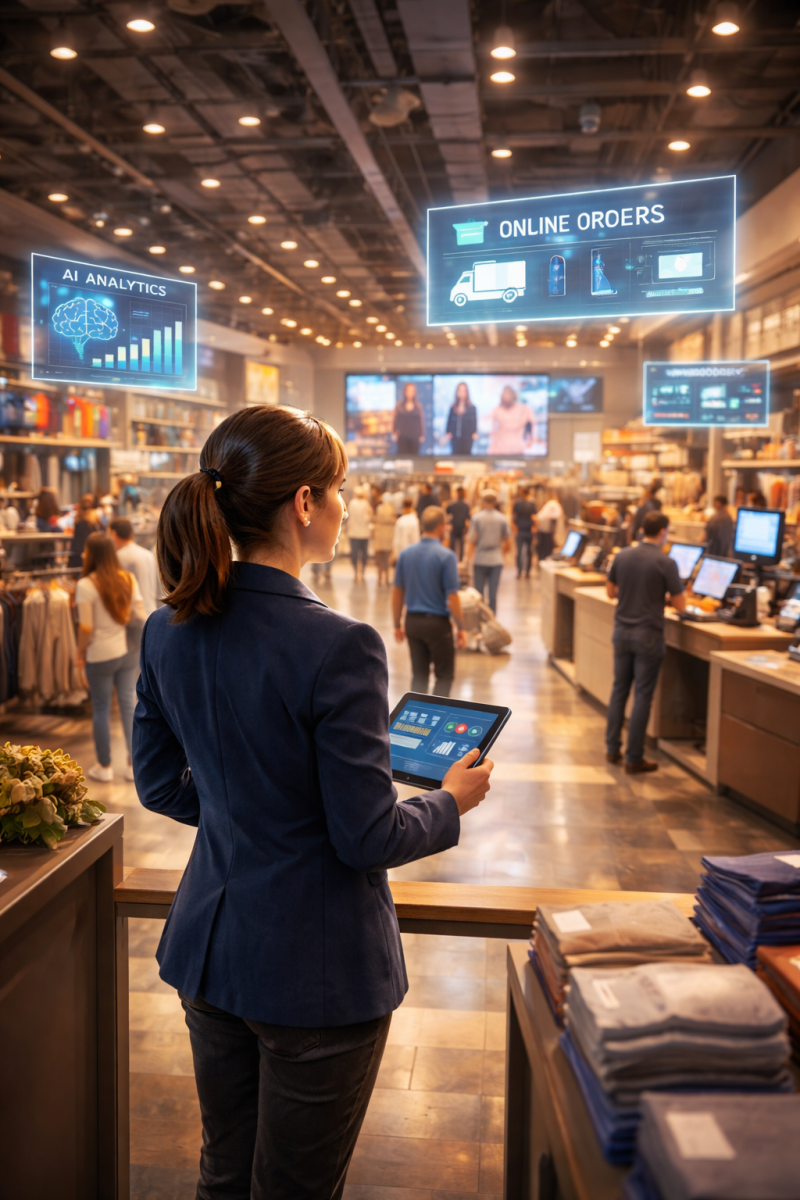
Successful retail leaders today must balance operational execution, team leadership, and digital strategy to navigate an increasingly complex store environment.
Final Perspective: The Store Manager as a Future Retail Strategist
As retail continues to evolve, the role of the store manager is becoming one of the most strategically important positions within the entire organization. While technology will continue to automate certain operational tasks, the human ability to interpret customer behavior, motivate teams, and create engaging in-store experiences will remain irreplaceable. The most successful retail leaders in the coming years will not simply react to change — they will anticipate it.
Retail environments are increasingly shaped by real-time data, shifting consumer expectations, and competitive market pressures. This means store managers must adopt a mindset of continuous improvement, staying informed about emerging retail trends while refining execution fundamentals on the sales floor. Adaptability, analytical thinking, and strong communication skills will define the next generation of store leadership.
For retailers, investing in store-level strategy and execution will remain one of the most powerful drivers of long-term performance. Physical stores still play a critical role in brand perception, customer loyalty, and omnichannel profitability. Leaders who understand how to optimize layout flow, merchandising impact, and customer engagement will continue to create measurable competitive advantages.
Ultimately, managing a retail store in 2026 is no longer about maintaining routines — it is about shaping outcomes. The stores that thrive will be those guided by leaders who can blend operational discipline with forward-thinking innovation, turning everyday store interactions into meaningful business growth opportunities.
About the Author
Christian DiBuono is a retail merchandising consultant specializing in store layout optimization, planogram strategy, and retail execution performance improvement. With hands-on experience in visual merchandising, inventory flow, and in-store customer behavior analysis, he helps retailers enhance sales productivity and improve the overall shopping experience.
His work focuses on bridging traditional retail fundamentals with modern data-driven store strategies, helping brands adapt to the evolving realities of omnichannel commerce and changing consumer expectations. Through consulting projects, digital templates, and retail insights, he supports store managers and retail leaders in creating more effective and profitable physical retail environments.
Add comment
Comments