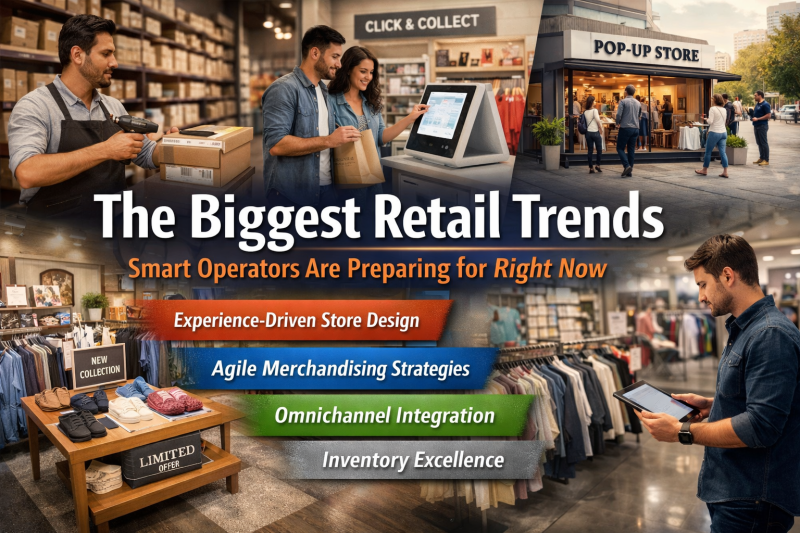
Modern retail success is increasingly defined by execution quality, adaptive merchandising, and customer-focused store environments.
Retail is no longer evolving in predictable cycles. Instead, it is shifting in real time, shaped by economic pressure, changing consumer expectations, and rapid advances in technology. The retailers who are performing strongly today are not simply reacting to change — they are preparing for it. They are studying customer behavior more closely, refining operational execution, and making deliberate investments that improve both profitability and experience.
Understanding the trends that smart retail operators are preparing for right now can help store leaders, merchandisers, and business owners stay competitive in an increasingly demanding market.
Experience-Driven Store Design Is Becoming a Competitive Advantage
Modern retail stores are no longer just places to transact. They are environments designed to influence behavior, build brand loyalty, and create memorable interactions. Leading operators are placing a stronger emphasis on customer flow strategy, impulse engagement zones, and storytelling displays that communicate value within seconds of entry.
This shift reflects a deeper understanding that shoppers today are often time-constrained and choice-overloaded. Retailers who simplify navigation, highlight key product stories, and reduce visual clutter are seeing stronger conversion rates. Instead of overwhelming customers with inventory density, smart operators are focusing on curated presentation that guides decisions naturally.
Precision Merchandising Is Replacing “Set It and Forget It” Planograms
Traditional merchandising relied heavily on static layouts that were reviewed periodically. Today’s retail leaders are moving toward dynamic merchandising strategies that are continuously optimized based on sales velocity, seasonality, and customer traffic patterns.
Stores that succeed are treating their sales floor as a living system. They are rotating promotional zones more frequently, reallocating space to high-performing categories, and using real-time insights to refine assortment placement. This operational agility allows retailers to maximize productivity per square foot while maintaining a fresh and relevant store environment.
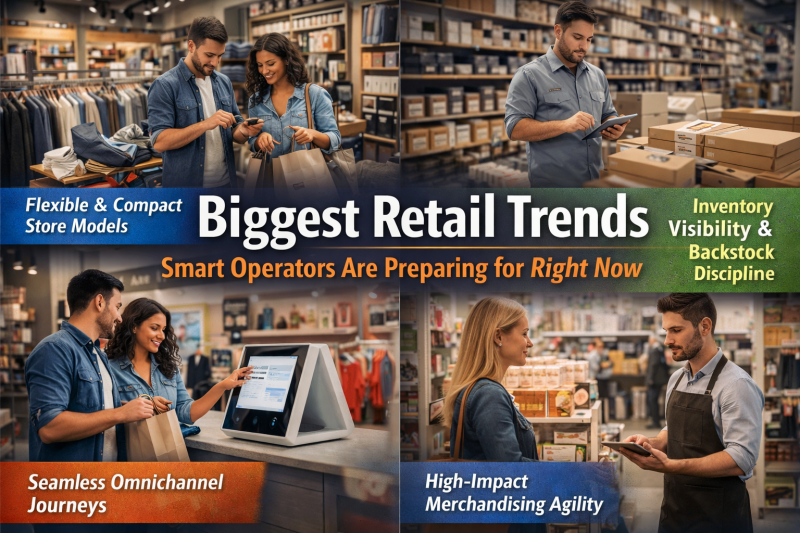
Retail leaders are shifting toward flexible store formats, real-time merchandising adjustments, and stronger inventory visibility to maintain competitive advantage.
Inventory Visibility and Backstock Discipline Are Driving Profitability
With tighter margins and unpredictable demand patterns, inventory management has become a strategic priority rather than a purely operational function. Smart retail operators are preparing for greater volatility by improving stock visibility and tightening backstock organization practices.
Clear reserve stock systems, disciplined replenishment routines, and defined overflow strategies are reducing shrinkage, improving shelf availability, and enabling faster response to demand spikes. Retail leaders understand that poor inventory execution is not just a logistics issue — it directly impacts customer trust and brand perception.
Smaller Formats and Flexible Store Models Are Gaining Momentum
Another major trend shaping retail strategy is the move toward adaptable store formats. From compact urban footprints to pop-up concepts and mobile retail units, operators are experimenting with formats that reduce fixed costs while maintaining strong brand presence.
These flexible models allow retailers to test new markets, respond to localized demand, and create urgency through limited-time experiences. The ability to deploy retail environments quickly and efficiently is becoming a meaningful competitive differentiator, particularly for emerging brands and specialty concepts.
Omnichannel Expectations Are Now Operational Realities
Customers no longer distinguish between physical and digital retail. They expect seamless transitions between online discovery and in-store fulfillment. Smart operators are preparing for this by redesigning store processes to support services such as click-and-collect, rapid returns handling, and localized fulfillment support.
Rather than viewing e-commerce as a separate channel, leading retailers are integrating digital behavior insights into in-store merchandising decisions. This alignment ensures that product visibility reflects not only historical sales performance but also online search trends and promotional engagement.
Labor Productivity and Execution Quality Are Under Greater Scrutiny
Retail teams today are expected to deliver higher levels of execution with tighter staffing models. As a result, successful operators are investing in clearer task prioritization, simplified visual standards, and training frameworks that help associates maintain merchandising integrity efficiently.
The focus is shifting from simply completing tasks to executing high-impact activities that drive measurable results. Daily recovery routines, zoning discipline, and targeted promotional setup strategies are becoming essential components of modern retail management.
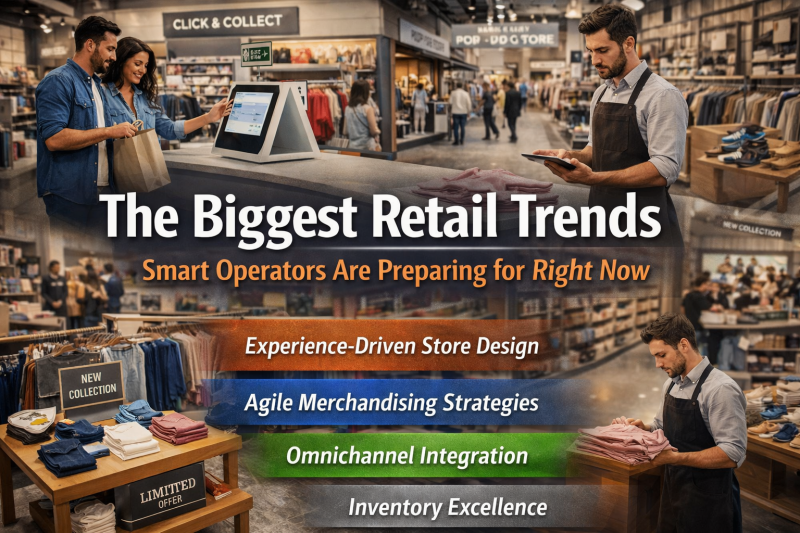
The integration of customer experience strategy, operational discipline, and omnichannel alignment is shaping the next generation of high-performing retail stores.
Retail Leadership Now Requires Strategic Agility
Perhaps the most important trend of all is the mindset shift among high-performing retail leaders. Success is no longer determined solely by operational consistency but by the ability to adapt quickly without losing brand clarity. Retailers who thrive are those who continuously test ideas, evaluate performance data, and refine execution standards.
In today’s retail landscape, preparation is not about predicting the future perfectly. It is about building systems, store environments, and merchandising strategies that can evolve as customer expectations change. Smart operators understand that retail success is increasingly driven by responsiveness, clarity of presentation, and disciplined execution at every level of the store.
For retail professionals willing to embrace these trends proactively, the current environment presents not just challenges but meaningful opportunities to differentiate, innovate, and grow.
Final Perspective: Retail Execution Will Define the Winners
As retail continues to evolve, the gap between average operators and high-performing store environments will only widen. The retailers that succeed will not necessarily be those with the largest budgets, but those with the clearest execution standards, the most adaptive merchandising strategies, and the strongest understanding of customer behavior in physical space.
Store layout precision, inventory discipline, and experience-driven merchandising are no longer optional improvements. They are becoming fundamental requirements for maintaining relevance and profitability in modern retail markets.
Retail leaders who prepare proactively today position their stores to respond faster to demand shifts, operate more efficiently, and create environments that convert traffic into long-term customer value.
About the Author
Christian DiBuono is a retail merchandising consultant specializing in store layout optimization, planogram strategy, and in-store customer flow improvement. He supports retailers and emerging brands with practical execution frameworks designed to increase product visibility, operational efficiency, and sales productivity.
If you are planning a store reset, new retail concept, or merchandising strategy update, you can explore consulting support or practical retail templates through the resources available on this website.
Add comment
Comments