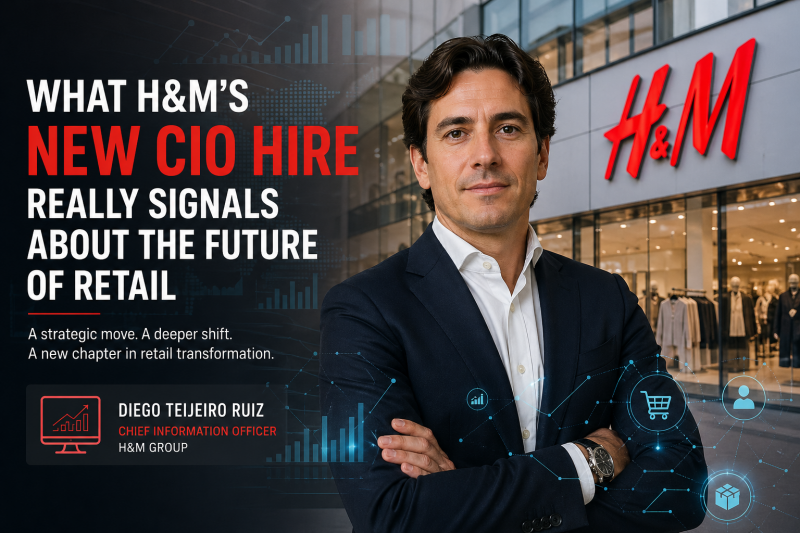
When H&M Group announced the appointment of Diego Teijeiro Ruiz as its new Chief Information Officer, it wasn’t just another executive reshuffle. It was a clear signal that technology is no longer a support function in retail — it’s the backbone of survival.
Teijeiro Ruiz brings nearly two decades of experience from Inditex, the company behind Zara and one of the most operationally efficient retail organizations in the world. His background in data, analytics, and aligning technology with business operations suggests H&M isn’t just hiring for IT leadership — they’re hiring for transformation.
This move comes at a critical time. H&M’s recent performance shows pressure on the top line, with sales declining slightly in local currencies and more significantly when adjusted for currency fluctuations. At the same time, the company is actively reducing store count and optimizing its physical footprint. What that tells you is simple: growth is no longer about opening more stores — it’s about making every channel smarter.
And that’s where this hire matters.
Retail is shifting from being store-led to system-led. The retailers winning right now aren’t just the ones with the best locations or pricing strategies. They’re the ones with the best data infrastructure, the fastest decision-making systems, and the ability to connect inventory, customer behavior, and merchandising into one unified flow.

H&M is clearly trying to close that gap.
Bringing in someone from Inditex is especially telling. Inditex built its dominance on speed, data visibility, and tight integration between design, supply chain, and store execution. That’s not a coincidence — it’s a system. By hiring someone who has operated inside that system, H&M is effectively importing a new way of thinking about retail operations.
This also ties directly into something most retailers still get wrong: they treat digital and physical as separate worlds. But the reality is that the future of retail is omnichannel execution at the operational level, not just the customer-facing level. It’s not about having a website and stores — it’s about making them function as one system.
H&M even reinforced this in its messaging, emphasizing the goal of improving the customer experience “across channels” while strengthening its overall technology foundation. That’s not branding language — that’s a roadmap.
There’s another layer here that most people overlook. H&M recently created a new chief supply chain officer role as well, signaling a broader restructuring of its operational leadership. When you combine supply chain transformation with a data-driven CIO hire, what you’re really seeing is a company rebuilding its core operating model.
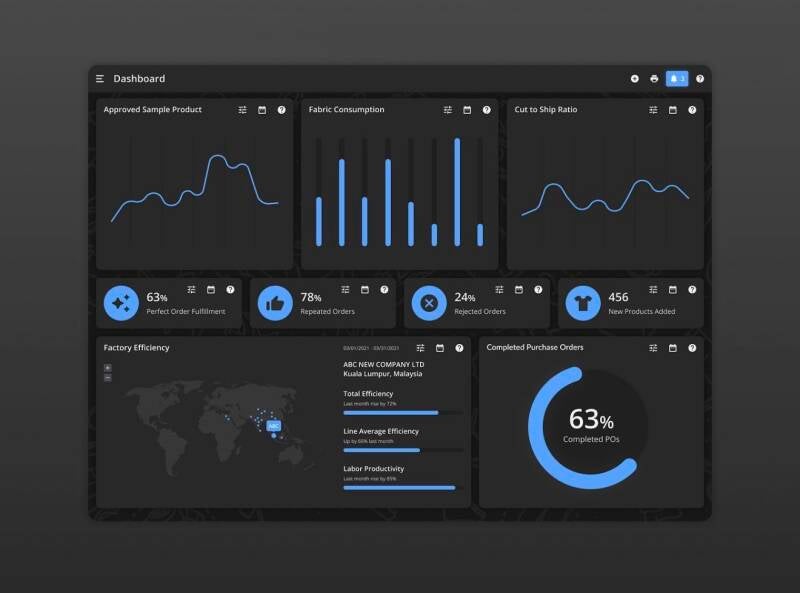
This isn’t about apps or websites. It’s about how product moves, how decisions are made, and how stores actually perform.
For anyone in retail — especially at the store level — this matters more than it seems. Because every improvement in data systems eventually shows up on the floor. Better assortment decisions, cleaner planograms, faster replenishment, and more intentional product placement all come from stronger backend systems.
In other words, technology leadership directly impacts merchandising execution.
That’s the real takeaway.
H&M isn’t just trying to “go digital.” They’re trying to become a more precise retailer. And in today’s environment, precision is what separates brands that survive from brands that slowly lose relevance.
The companies that win won’t necessarily be the biggest. They’ll be the ones that understand what’s actually happening in their stores — and can act on it faster than everyone else.
H&M just made a move that suggests they understand that.
Add comment
Comments