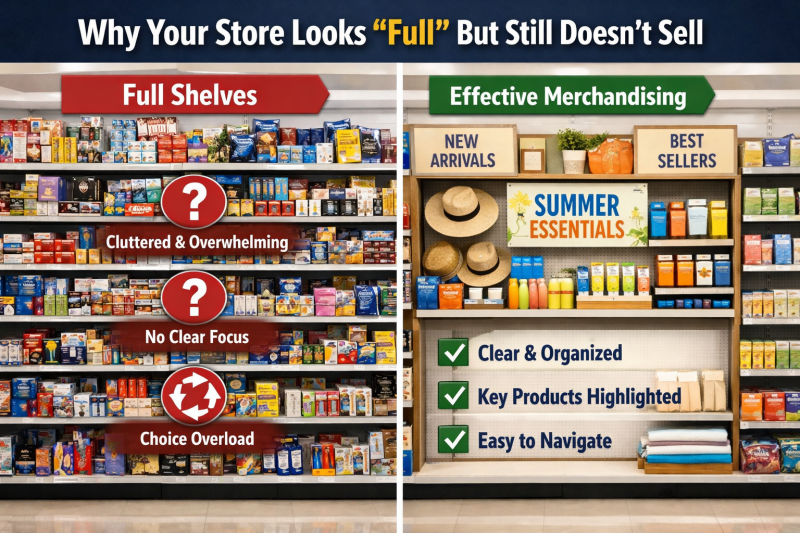
Many retail stores look packed with products, yet struggle to generate strong sales. Shelves are stocked, displays are filled, and inventory levels appear healthy, but customers still walk out without buying. The problem usually isn’t inventory — it’s how that inventory is presented, organized, and experienced by shoppers.
A store that looks “full” is not the same as a store that is merchandised to sell. When products are simply placed wherever space is available, the result is visual noise rather than a clear shopping experience. Customers may see many items, but they don’t quickly understand what matters, what’s new, or what they should buy.
The Difference Between Full Shelves and Effective Merchandising
Full shelves often create the illusion of abundance, but abundance without structure can confuse shoppers. When every product competes equally for attention, nothing stands out. Customers typically make decisions within seconds, and if the shelf doesn’t communicate clearly, they move on.
Effective merchandising uses visual hierarchy to guide attention. This means placing key products at eye level, highlighting best-sellers, and ensuring that supporting products don’t overpower the main items. When this hierarchy is missing, shelves become cluttered and difficult to interpret.
The Hidden Problem of Product Overcrowding
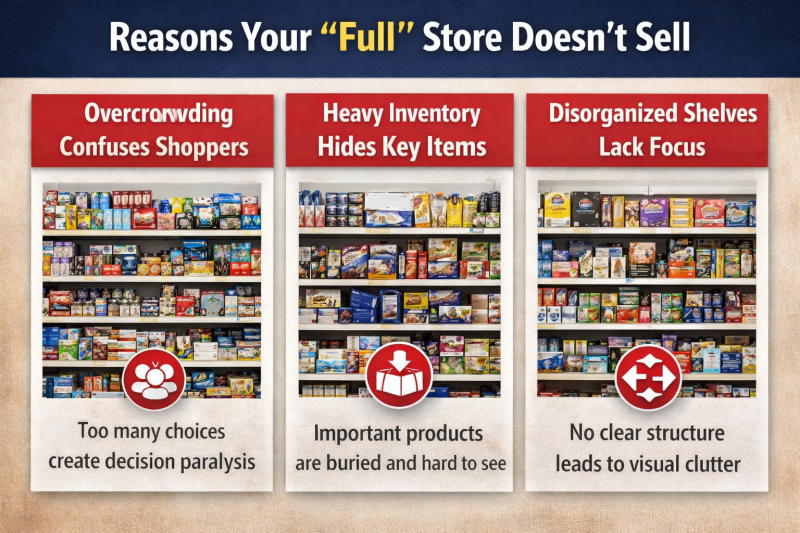
Many stores believe more product equals more opportunity to sell. In reality, overcrowded shelves often decrease sales because customers struggle to compare items or understand differences between them. Too many choices placed too tightly together can slow decision-making or cause shoppers to abandon the purchase entirely.
Spacing and product breathing room are essential for visibility. When customers can clearly see packaging, pricing, and category groupings, they feel more confident making a purchase. A shelf with fewer but well-presented options can outperform one that is packed edge to edge.
When Category Structure Breaks Down
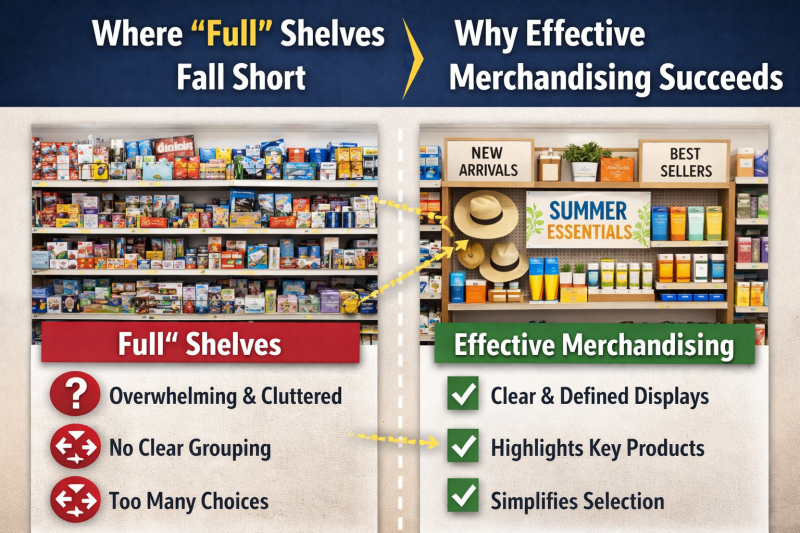
Another common reason stores look full but don’t convert sales is poor category organization. Products may technically belong in the same section, but without logical grouping, shoppers cannot easily navigate the assortment. Items intended to complement each other end up scattered or mixed inconsistently.
Clear category zoning allows customers to shop intuitively. When products are grouped by need, use case, or brand hierarchy, shoppers spend less time searching and more time discovering. This structure turns a shelf from a storage area into a guided shopping experience.
Why Visibility Beats Inventory
Retail success often depends less on how much inventory a store carries and more on how visible the right products are. High-margin or high-demand items frequently get buried behind slow-moving products simply because space was available. When this happens, the products that should drive revenue become harder to notice.
Smart stores prioritize placement instead of treating every item equally. Key products receive the best positions, promotional items get dedicated visibility, and slower inventory is placed where it won’t interfere with primary decision points.
The Impact of Customer Traffic Flow
Even perfectly stocked shelves will underperform if customers don’t naturally encounter them. Many stores unintentionally place important products in areas that receive little traffic or poor sightlines. As a result, shelves appear full but are rarely engaged by shoppers.
Traffic flow planning ensures customers move past the categories that matter most. Strategic fixture placement, power walls, and destination displays guide shoppers through the store in a way that increases exposure to priority products. Without this structure, even strong merchandise can go unnoticed.
The Role of Visual Storytelling
Retail environments work best when they communicate a clear message. A strong display tells customers what the store is excited about right now — whether that’s a seasonal product, a trending item, or a high-value category. When shelves simply hold products without a story, customers see inventory rather than opportunity.
Visual storytelling turns products into solutions. Signage, focal displays, and featured assortments help shoppers quickly understand what they should pay attention to. This clarity transforms a store from a warehouse of items into a curated retail experience.
Why “Full” Can Actually Hurt Performance
A store that is overly full can unintentionally signal disorganization or excess inventory. Customers may assume products are outdated, overstocked, or unpopular if they see large volumes packed tightly together. Instead of encouraging purchases, this environment can reduce perceived value.
Strategic presentation creates the opposite effect. When products are spaced thoughtfully and highlighted intentionally, shoppers perceive them as more desirable. The same inventory can feel premium simply because it is presented with clarity and purpose.
What Retail Managers Should Focus On Instead
The goal of merchandising should not be to fill every inch of shelf space. Instead, the focus should be on guiding customers toward the products most likely to convert into sales. This means prioritizing visibility, simplifying assortment presentation, and ensuring each shelf communicates clearly.
Store managers and operations leaders who regularly review planograms, category placement, and visual hierarchy often see stronger performance even without increasing inventory. The difference comes from turning shelves into decision-making tools rather than storage space.
Final Thoughts
A store can be fully stocked and still underperform if the merchandise is not structured to help customers shop effectively. The most successful retail environments balance inventory levels with clarity, hierarchy, and strategic placement. When shelves communicate clearly, customers buy more confidently and more frequently.
Retail performance rarely improves simply by adding more products. It improves when stores design shelves and layouts that make shopping easier, faster, and more intuitive for the customer.
Add comment
Comments