
Spring reset season often starts behind the scenes before customers ever notice the change.
Spring is one of the most important reset seasons in retail. As winter inventory clears out and warmer weather approaches, stores should be transitioning their merchandising strategy to reflect new customer behavior, seasonal demand, and promotional priorities. Yet in many stores, spring arrives while the sales floor still looks like late winter.
The biggest issue isn’t that retailers don’t plan resets. Most companies create seasonal plans months in advance through merchandising teams, category managers, and vendor partnerships. The problem is execution on the store floor rarely happens as quickly or as completely as leadership assumes.
Seasonal resets often depend on communication between multiple layers of the business. Corporate teams design planograms, vendors coordinate shipments, store managers schedule labor, and field teams attempt to implement the changes. When even one of those layers slows down, the entire seasonal transition can fall behind.
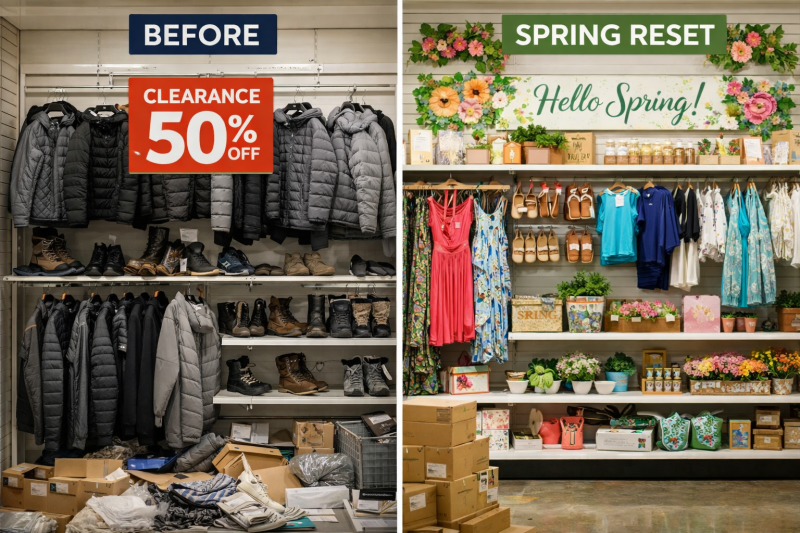
Many stores visually transition too late, leaving winter merchandising in place while spring inventory arrives.
By the time spring officially arrives, many stores still carry winter merchandising structures. Heavy products, cold-weather promotions, and outdated displays remain in high-visibility areas that should already highlight seasonal items. Customers walk into the store expecting fresh seasonal relevance but instead encounter a sales floor that feels weeks behind.
This delay has real consequences for sales performance. Retail shelves operate on visibility and timing, meaning products only sell when they are placed in front of customers at the right moment. If spring merchandise arrives but sits in the backroom while winter displays remain on the floor, retailers miss the peak discovery window when customers are actively shopping for seasonal products.
Another overlooked issue is incomplete resets. In many stores, resets are technically started but never fully finished due to labor shortages, time constraints, or unclear instructions. A shelf may be partially updated, but adjacent sections still follow the previous layout, creating a confusing shopping experience for customers.
Customers rarely analyze planograms consciously, but they immediately notice when a store feels disorganized. When categories are not clearly grouped, seasonal messaging feels inconsistent, and promotional items are difficult to find, customers spend less time browsing. The result is fewer impulse purchases and weaker overall basket sizes.
Spring resets should also reflect how customer movement changes during seasonal transitions. As shoppers begin purchasing outdoor items, seasonal apparel, beauty products, and home improvement goods, traffic patterns inside the store shift. Smart retailers redesign key areas of the store to guide customers toward these seasonal categories naturally.
Unfortunately, many stores treat resets as simple product swaps rather than strategic layout adjustments. Fixtures remain in the same position, product density increases to make room for new items, and visual hierarchy becomes cluttered. Instead of creating a clear seasonal story, the store becomes visually overwhelming.
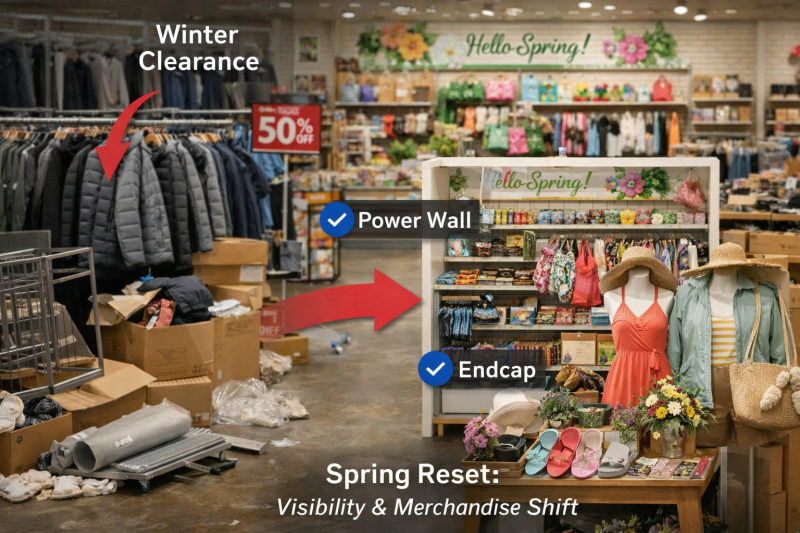
Power walls and endcaps should highlight seasonal merchandise first.
Retail success during seasonal transitions depends heavily on visibility hierarchy. High-margin or trend-driven spring products should dominate power walls, endcaps, and entry sightlines where customers naturally look first. When these areas are filled with leftover winter inventory, stores lose their most valuable selling space.
Another major factor is inventory flow. Seasonal merchandise often arrives in waves, and without clear merchandising rules, staff may place new items wherever space appears available. Over time this leads to fragmented product placement, making it harder for customers to understand the assortment.
The most successful retailers treat seasonal resets as operational strategy rather than visual decoration. They focus on category zoning, traffic flow adjustments, and strong entry displays that communicate the season immediately. When executed properly, customers understand the store’s seasonal story within seconds of walking through the door.
This is why many high-performing retailers begin their seasonal reset planning months in advance. They analyze customer behavior from previous years, forecast demand shifts, and design merchandising strategies that guide customers toward the most important products. The goal is not simply updating shelves but aligning the entire store with seasonal buying behavior.
For retailers that fall behind during spring resets, the solution usually isn’t adding more products to the floor. Instead, the focus should be on clarity, visibility, and timing. When categories are clearly organized and seasonal messaging is visible from multiple sightlines, customers naturally explore more of the store.
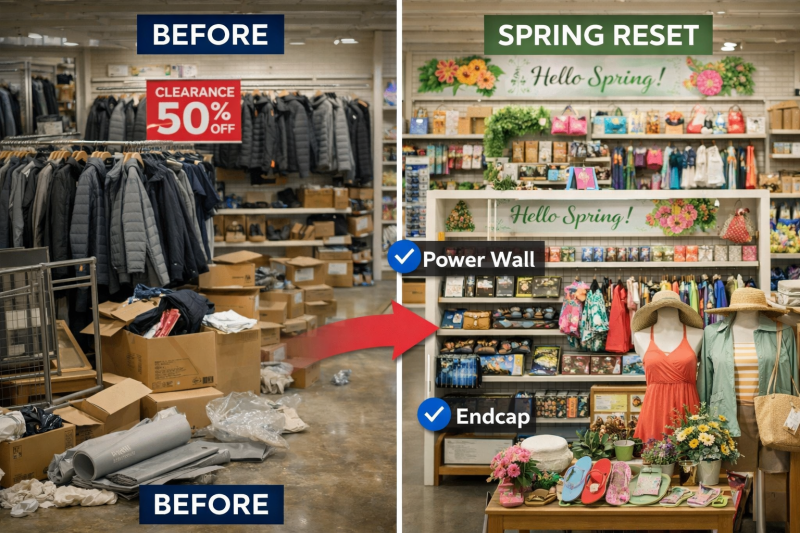
Early seasonal resets allow retailers to capture customer attention before competitors.
Spring is one of the most competitive periods for retail discovery. Customers are actively looking for new products, seasonal inspiration, and fresh store experiences. Stores that execute their resets early capture this momentum, while stores that delay the transition struggle to catch up.
In retail, timing often matters more than inventory quantity. The stores that win the season are not necessarily the ones with the most products, but the ones that present the right products at the exact moment customers are ready to buy.
Spring resets are not just operational tasks — they are strategic opportunities. Retailers who recognize this treat their sales floor like a seasonal marketing platform rather than a static display of products. When stores align layout, visibility, and timing, the entire environment works together to drive stronger customer engagement and higher sales.
Add comment
Comments