Retail inventory shrink is finally declining from pandemic highs — but the real story is why.
Retail inventory shrink — the gap between recorded inventory and actual stock — became one of the most talked-about issues in the industry during and after the pandemic. Retailers across the U.S. reported massive losses attributed to theft, operational disruptions, and supply chain chaos. Now, new industry reporting suggests shrink levels are beginning to decline from those pandemic-era peaks.
But the story behind that improvement is far more complicated than simply saying “theft is down.” Retail shrink has always been driven by multiple factors, including theft, operational mistakes, vendor fraud, and inventory mismanagement. Understanding why shrink is declining now reveals deeper lessons about how retail operations actually function.
What Happened to Retail Shrink During the Pandemic
During the pandemic years, retail stores experienced an unusual combination of operational disruption and social change. Staffing shortages, overwhelmed supply chains, and inconsistent store operations created the perfect environment for inventory errors and theft to increase simultaneously.
At the same time, many retailers reduced in-store staffing or security presence as stores struggled to operate under pandemic restrictions. This weakened operational oversight, making stores more vulnerable to both organized retail crime and everyday shoplifting incidents.
Retailers also experienced massive spikes in inventory volatility. Supply chains were disrupted globally, meaning stores were receiving inconsistent shipments, substituting products, and dealing with constant inventory adjustments — all of which increased the likelihood of shrink through administrative errors.
Why Shrink Numbers Are Now Declining
Recent industry data shows retailers reporting shrink levels that are lower than the pandemic highs. Analysts believe the improvement is likely due to several combined factors, including better operational controls, improved inventory accuracy, and more consistent store execution.

Retailers have strengthened inventory checks, staffing levels, and operational controls compared with pandemic disruptions.
One major driver is that retailers have rebuilt many of the operational systems that were weakened during the pandemic. Staffing levels, training programs, and inventory processes have stabilized compared with the chaotic conditions stores faced between 2020 and 2022.
Another factor is that retailers are investing heavily in loss-prevention technology and operational analytics. Modern retail loss prevention increasingly relies on data systems, surveillance technology, and operational audits rather than just physical security guards.
Supply chains have also normalized compared with pandemic disruptions. With more stable product flows and inventory tracking, stores now experience fewer mismatches between recorded inventory and actual stock — which directly reduces shrink metrics.
The Real Story: Shrink Was Never Just About Theft
One of the biggest misconceptions about retail shrink is that it is primarily driven by shoplifting. In reality, shrink has always been a mixture of internal theft, operational mistakes, and inventory process failures.
Industry research shows that a large portion of shrink comes from operational issues inside the store, including inventory miscounts, receiving errors, and poor stock handling. In many cases, inefficient store operations can create more losses than organized retail crime itself.
This matters because focusing only on theft misses the larger operational picture. Retailers that treat shrink as purely a security problem often overlook the operational processes that quietly drive most of the losses.
Why Operational Retail Discipline Matters
The recent decline in shrink suggests something important about retail execution: when stores run well operationally, shrink tends to fall naturally.

Improved inventory processes and operational discipline play a major role in reducing retail shrink.
Accurate inventory counts, structured receiving processes, and disciplined merchandising standards reduce the opportunities for losses to occur. These operational fundamentals often matter more than high-tech anti-theft solutions.
In other words, shrink is often a symptom of operational breakdown rather than the root problem itself.
What Smart Retailers Should Take From This
Retailers should view the decline in shrink not as a solved problem but as a signal about what operational discipline can achieve. When stores are staffed properly, inventory processes are standardized, and merchandising execution is consistent, losses become much easier to control.
Shrink is ultimately a reflection of how well a store operates. The same operational habits that improve inventory accuracy also improve shelf availability, merchandising quality, and customer experience.
Retailers that understand this will treat shrink reduction not as a security strategy — but as an operational strategy.
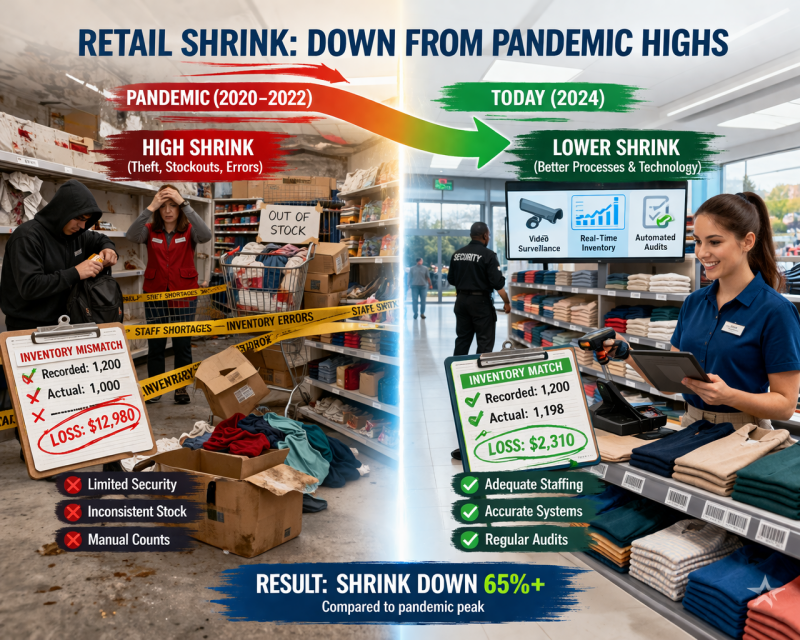
Shrink reduction isn’t just about theft prevention — it reflects how well retail operations actually function.
Final Thoughts
Retail shrink will likely never disappear entirely. Theft, human error, and operational complexity will always create some level of loss in physical retail.
But the recent decline from pandemic highs shows that retail execution still matters more than headlines about crime. When stores run well operationally, inventory accuracy improves — and shrink tends to follow.
For retailers, the lesson is simple: the best loss-prevention strategy isn’t just security. It’s operational excellence.
Add comment
Comments