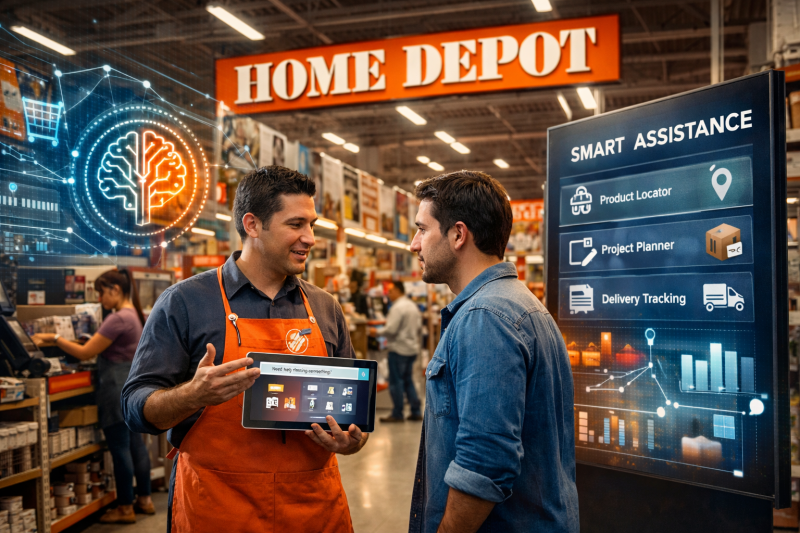
A new chapter in retail strategy
For years, retail has been dominated by one question: will physical stores survive the rise of e-commerce and giants like Amazon? Now, with the rise of artificial intelligence, that question has evolved—but the answer from Home Depot is clear. The company believes that stores aren’t just surviving, they’re becoming more important than ever.
At a recent industry conference, Home Depot leadership emphasized that even in the age of AI and “agentic commerce,” physical locations remain central to the customer experience. Instead of replacing stores, AI is being used to strengthen them and connect every part of the shopping journey.
What actually changed
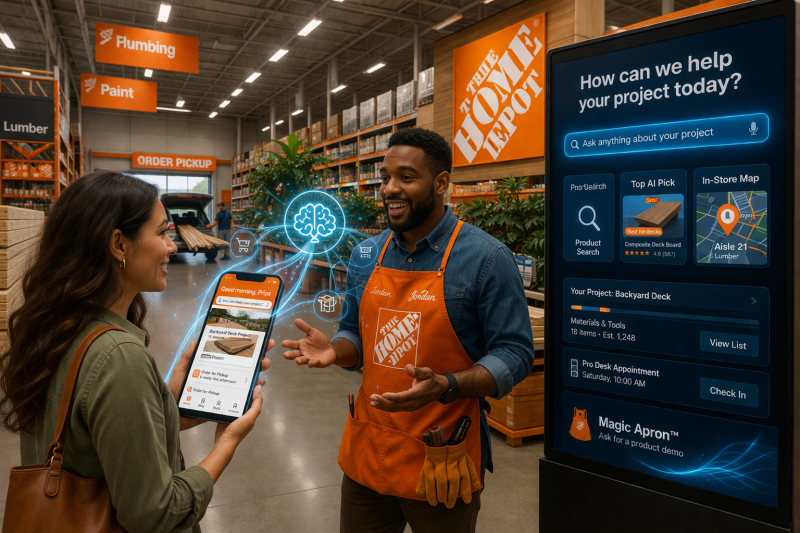
Home Depot hasn’t just talked about AI—it has actively built it into its ecosystem. One of its biggest moves is “Magic Apron,” a generative AI tool designed to help customers find products, answer questions, and even summarize reviews in real time.
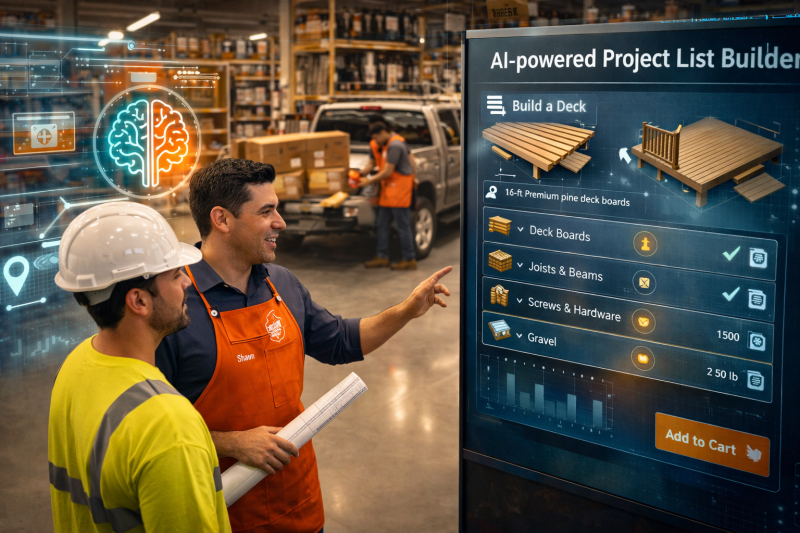
Beyond that, the company is expanding AI into project-based workflows, especially for professional customers. Tools like AI-powered material list builders and project planning systems allow users to generate full shopping lists, track deliveries, and manage jobs all in one place.
Why this matters more than it seems
This isn’t just about adding tech features—it’s about removing friction. Home Depot is building a system where customers can move seamlessly between online, mobile, and in-store experiences without losing context.
That’s a major shift from traditional retail, where stores and digital channels often operate separately. By connecting them through AI, Home Depot is creating a unified experience that mirrors how people actually shop today.
The bigger strategic play
Retail history is full of companies that failed to adapt to major shifts—especially when e-commerce first took off. Home Depot is clearly trying to avoid that fate by leaning into AI early while still doubling down on its physical presence.
Instead of choosing between digital and physical, the company is blending both into one ecosystem. That approach allows it to compete not just with traditional retailers, but also with tech-driven platforms that prioritize convenience and personalization.
What this means for the future of retail
The takeaway is simple: AI isn’t replacing stores—it’s redefining their role. Stores are no longer just places to buy products; they’re becoming part of a larger, connected system powered by data, tools, and real-time decision-making.
Retailers that treat AI as an add-on risk falling behind, while those that integrate it into the full customer journey—like Home Depot—is doing—position themselves to stay relevant. In a world where convenience wins, the brands that connect everything will be the ones that last.
What stands out here isn’t just the use of AI—it’s where it’s being applied. Home Depot isn’t using AI to replace the store experience, it’s using it to remove friction inside it. That’s a major shift. Most retailers try to digitize the experience, but the ones that win are the ones that make the physical experience easier, faster, and more intuitive.
Final thoughts
Home Depot’s strategy shows that the future of retail isn’t about choosing between store or screen. It’s about building an experience where both works together seamlessly.
And if anything, this shift proves one thing: the stores that survive won’t just sell products—they’ll be powered by intelligence.
If you’re thinking about how your store experience performs in a world that’s becoming more AI-driven, I help retailers break down what’s actually happening inside their stores—from layout to product visibility to customer flow.
Add comment
Comments