Why Bed Bath & Beyond bought The Container Store, what condition the retailer was in before the deal, and what this acquisition could mean for the future of home retail.
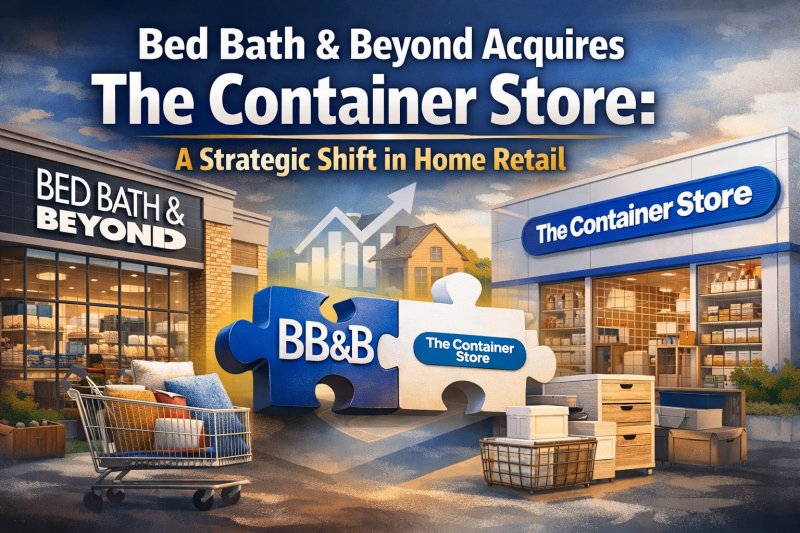
Bed Bath & Beyond’s agreement to acquire The Container Store for about $150 million is not just another retail deal. It looks more like a platform move: an attempt to turn Bed Bath & Beyond from a home-goods seller into a broader home ecosystem that combines retail, storage, design, and in-home services under one umbrella. The company said The Container Store will join its omnichannel retail pillar, while Elfa and Closet Works will help anchor a growing home services business.
What makes this deal especially interesting is that Bed Bath & Beyond is not buying The Container Store simply for its name. Marcus Lemonis said Beyond had studied the business for more than eighteen months and saw value in its more than 100 premium locations, 2.2 million square feet of retail space, and a culture that fit the operating standards the parent company wants to build. In other words, this is a real estate, brand, and services play all at once.
The move also shows that Bed Bath & Beyond believes physical stores can still matter when they do more than hold product. Beyond’s plan is to rebrand locations as “The Container Store / Bed Bath and Beyond” and use them not only for storage and organization, but also for bed, bath, kitchen, entertaining, and expanded home services such as flooring, lighting, and cabinetry. That suggests the company sees stores less as simple selling boxes and more as showrooms, service hubs, and customer-acquisition assets.
So why acquire The Container Store specifically? Because it solves multiple strategic gaps at once. The Container Store already has credibility in organization, closets, and custom spaces, while Elfa and Closet Works add design, customization, and installation capabilities that Bed Bath & Beyond did not fully own before. Instead of competing only on products, the combined company can now pitch a fuller “improve your home” journey, which is usually a stickier and higher-margin business than just selling bins, towels, or cookware.
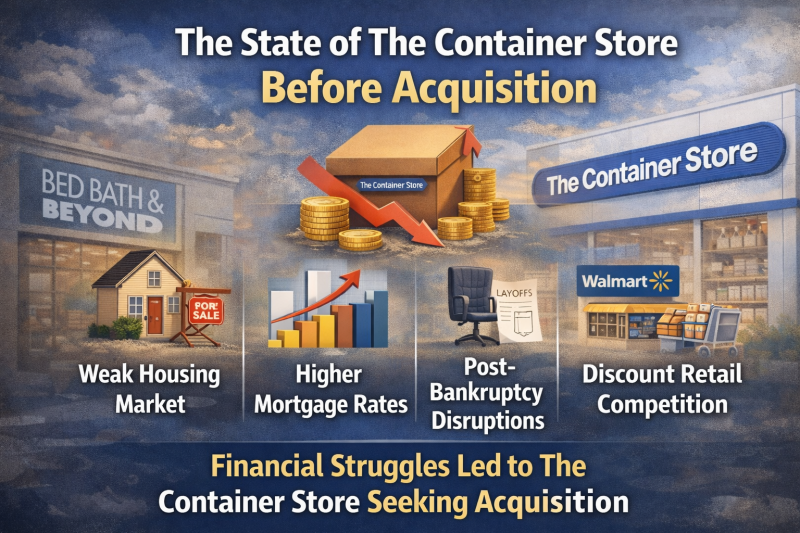
The condition of The Container Store before this acquisition helps explain why it became available. The retailer filed for Chapter 11 in December 2024, emerged in January 2025, shed nearly $88 million in debt, accessed $40 million in new financing, and became privately held under lender ownership. Even after that restructuring, it was still clearly in turnaround mode rather than growth mode.
Its struggles were not caused by one issue alone. The company had been squeezed by a weak housing market, elevated mortgage rates, softer demand tied to fewer moves and remodels, and stronger competition from big-box and discount retailers selling organizational products at lower price points. After bankruptcy, it also went through leadership disruption, layoffs affecting fewer than 70 employees, paused capital projects, a merchant leadership change, and a broader assortment reset.
That is what makes this acquisition feel less like a rescue and more like a repurposing. Bed Bath & Beyond seems to believe The Container Store was a good concept trapped inside a stressed balance sheet and an incomplete growth model. Lemonis has been unusually direct in saying that Beyond passed on an earlier 2024 investment opportunity because of concerns around leadership, brand direction, and the company’s financial health, then came back once the asset had been restructured and could fit better into a larger strategic vision.
My read is that this is a vertical expansion play disguised as a retail acquisition. Bed Bath & Beyond is trying to own more of the home lifecycle: shopping for products, organizing spaces, designing solutions, financing pieces of the home journey, and potentially attaching services to those purchases. When management talks about an “Everything Home” ecosystem and says the deal should help fill critical gaps in both retail and home services, that points to a company trying to build recurring customer value rather than rely on one-off transactions.
What happens next will depend on execution, not narrative. Beyond expects at least $40 million in annualized cost savings and productivity gains within 12 to 18 months of fully integrating Kirkland’s Home, The Container Store, Elfa, and Closet Works, but synergy targets are always easier to announce than to deliver. The real test will be whether the company can turn those large-format stores into productive cross-category destinations without diluting what made The Container Store distinct in the first place.
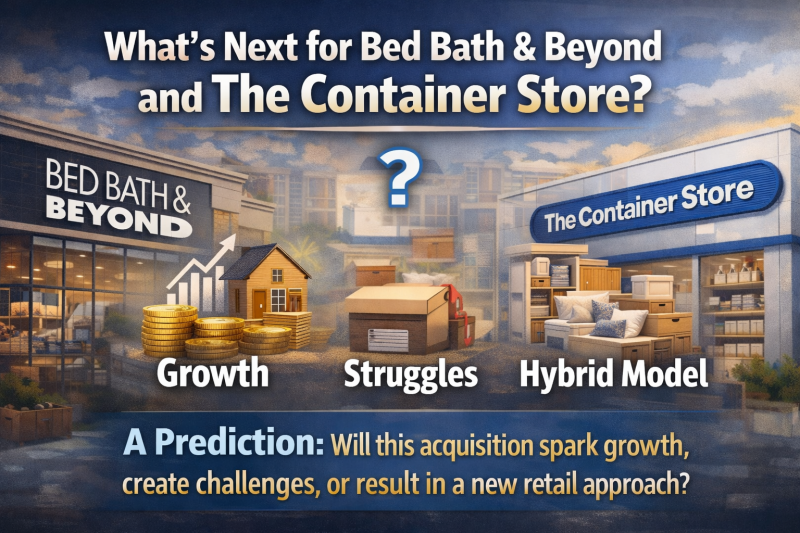
My prediction is that the combined company will push hard into a hybrid model: part specialty retail, part design-and-installation business, part branded home platform. That could work if Bed Bath & Beyond uses The Container Store’s premium footprint to sell higher-value projects and services, not just more commodity merchandise. But if the rebrand confuses shoppers, weakens The Container Store’s niche authority, or turns stores into overstuffed “everything” boxes without a clear customer promise, then the deal could become another example of retail scale without retail clarity.
The biggest takeaway is that this acquisition says a lot about where retail is heading. Winning in home retail no longer looks like just having the right products on a shelf; it looks like owning the customer’s project, space, and problem from start to finish. Bed Bath & Beyond is betting that storage, organization, and home services are not side categories anymore, but central pieces of the modern home business.
I can turn this into a cleaner publish-ready blog format next with a stronger headline, meta description, and a LinkedIn post to promote it.
Add comment
Comments