How Converse’s slowdown and Wacoal’s acquisition strategy reveal where retail competition is heading next.
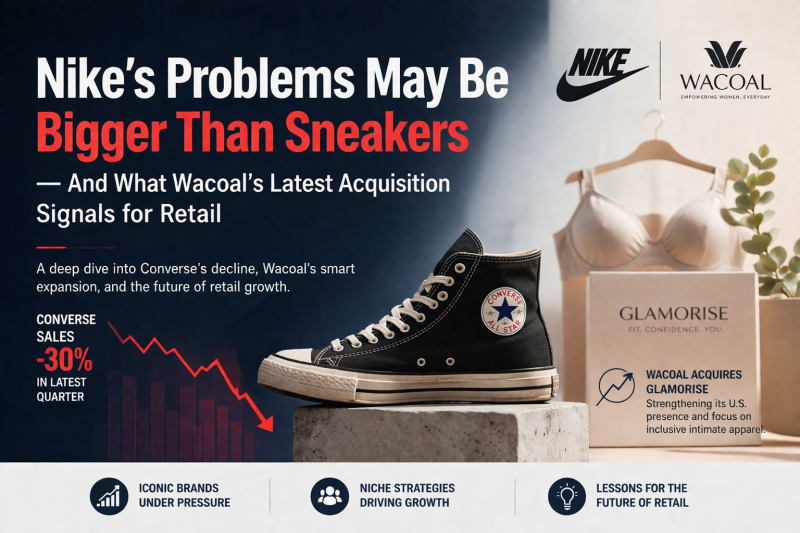
The latest retail developments highlight two very different strategic realities: global giants struggling to maintain momentum and niche brands expanding aggressively to capture underserved markets. In the newest retail industry updates, the performance of Nike’s subsidiary Converse and the acquisition strategy of Wacoal offer a glimpse into where retail competition is heading next.
Both stories reveal a broader truth about modern retail: brand power alone is no longer enough. Companies must constantly adapt product positioning, category strategy and market reach to stay competitive.
Converse Is Becoming a Drag on Nike’s Performance
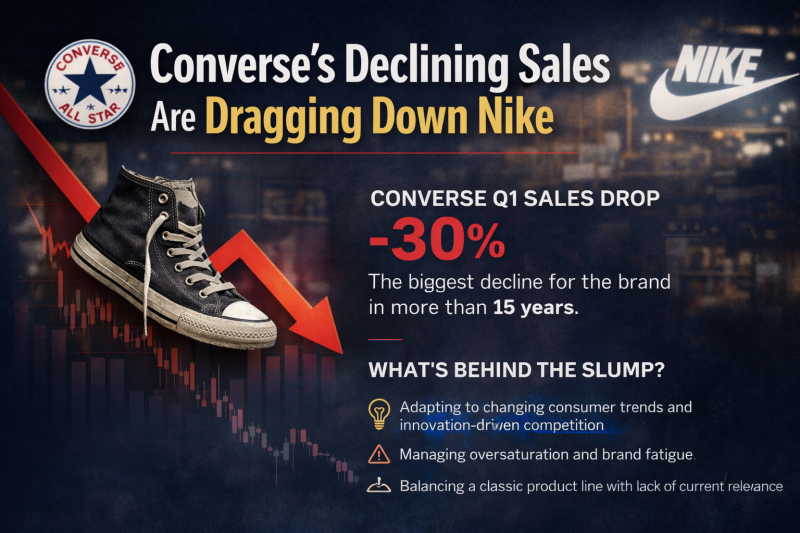
One of the most notable developments in the latest retail roundup is the declining performance of Converse, which has become a financial drag for Nike. Sales for the sneaker brand fell more than 30% in the latest quarter, highlighting weakening demand for one of the industry’s most recognizable footwear brands.
This drop suggests a deeper issue than temporary consumer hesitation. In the sneaker industry, cultural relevance drives sales as much as product design, and Converse’s classic silhouettes may be struggling to maintain momentum in a market increasingly dominated by innovation-driven brands and athletic performance products.
The situation also exposes a common challenge large apparel companies face: legacy sub-brands can quickly shift from growth drivers to performance liabilities when consumer tastes evolve.
The Sneaker Market Is Entering a New Competitive Phase
The slowdown for Converse reflects a broader transition occurring in the global footwear market. Over the past decade, sneaker demand exploded due to streetwear culture, celebrity collaborations and resale markets that turned shoes into collectible assets.
Today, however, that explosive growth has matured into a more competitive and fragmented landscape. Newer brands, performance-focused footwear and lifestyle innovation are competing for attention, making it harder for long-established models to maintain cultural momentum.
For Nike, this creates a strategic dilemma. The company must decide whether to reinvent Converse with new product innovation or accept slower growth from a brand historically built around timeless simplicity.
Wacoal’s Acquisition of Glamorise Shows the Power of Niche Expansion
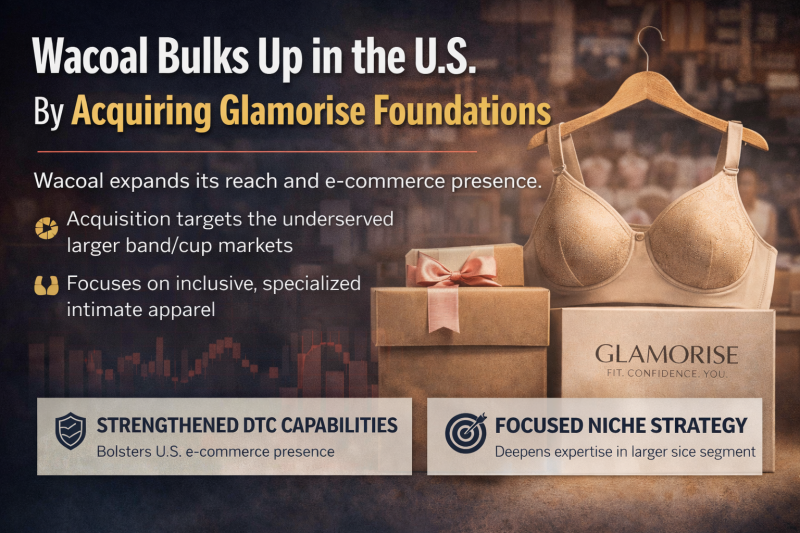
While Nike faces challenges in one segment of its portfolio, Wacoal is pursuing growth through targeted acquisition. The Japanese lingerie company recently acquired Glamorise Foundations, a U.S.-based brand focused primarily on online sales.
This acquisition strengthens Wacoal’s position in the U.S. market while expanding its direct-to-consumer and e-commerce capabilities. The deal also enhances Wacoal’s ability to develop products in the larger band and cup size segment, an area that remains underserved across much of the apparel industry.
Rather than chasing broad market dominance, Wacoal’s strategy focuses on deepening expertise in specific customer needs. That targeted positioning could give the company a stronger competitive edge than traditional mass-market expansion.
Why Specialized Categories Are Winning in Retail
Wacoal’s acquisition highlights an important retail trend: specialized categories often outperform generalist approaches. Consumers increasingly expect brands to deliver products tailored to their specific needs, body types or lifestyles.
Companies that excel in these niches tend to build stronger brand loyalty because they solve problems that larger brands often overlook. In the case of intimates, sizing inclusivity and product comfort are major purchasing drivers.
By expanding its capabilities in this segment, Wacoal is effectively investing in a category where customer loyalty and repeat purchasing are significantly higher than in trend-driven apparel.
The Bigger Retail Lesson
Taken together, these two stories illustrate a critical shift happening across retail. Growth today is not simply about scale — it is about relevance.
Nike’s challenge with Converse shows how even iconic brands must continually evolve to remain culturally relevant. Meanwhile, Wacoal’s acquisition strategy demonstrates how focusing on underserved markets can create sustainable long-term growth.
Retailers that succeed in the coming decade will likely be those that combine brand power with sharper category strategy and deeper customer understanding.
Final Thoughts
Retail is entering an era where agility matters more than size. Brands that fail to evolve risk becoming legacy names with declining relevance, while companies that identify overlooked customer segments can unlock powerful growth opportunities.
The contrasting moves by Nike and Wacoal serve as a reminder that in modern retail, strategy often matters more than scale.
Add comment
Comments