Retail theft has become one of the most discussed challenges in modern retail. Many companies respond by investing heavily in surveillance cameras, security guards, locked cabinets, and electronic tags attached to merchandise. While these tools can help reduce theft, they often treat the symptom rather than the root cause of the problem. The truth is that one of the most powerful theft-prevention strategies is something retailers rarely think of as security at all: store layout and merchandising visibility.
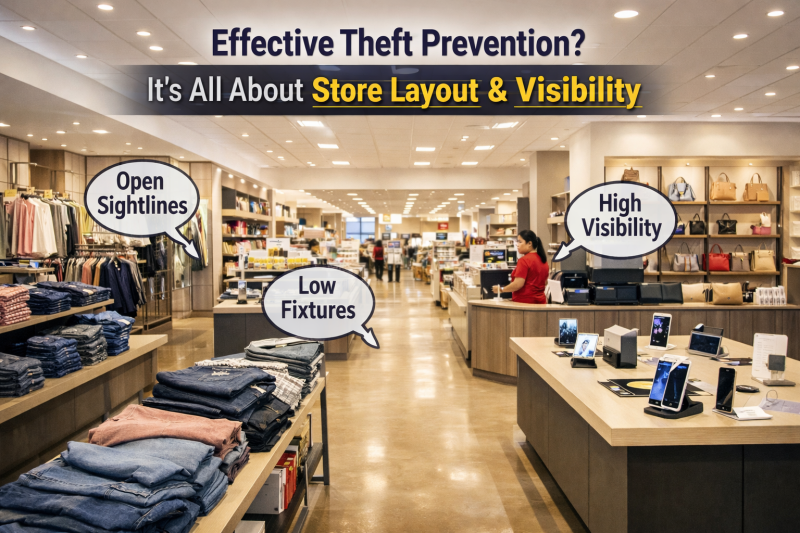
Most retail theft happens because products are placed in areas where visibility is poor and monitoring is difficult. Hidden corners, tall shelving units, cluttered displays, and poorly positioned aisles create natural blind spots within a store. These blind spots allow shoplifters to conceal items without drawing attention from employees or other shoppers. When store design unintentionally creates these hidden zones, theft becomes significantly easier.
Retailers often assume theft prevention begins with technology, but in reality it begins with how the store is physically structured. A well-designed retail layout naturally increases visibility across the sales floor and reduces the number of areas where someone can hide their actions. Lower fixture heights, open sightlines, and strategic placement of high-value merchandise can dramatically reduce opportunities for theft. In many cases, simply reorganizing product placement can be more effective than adding another security camera.
Another overlooked factor in theft prevention is product density and shelf organization. When shelves are overcrowded or poorly organized, it becomes difficult for staff to quickly notice when items are missing. Clean, structured merchandising systems make discrepancies more visible, allowing employees to spot theft much faster. Organized shelves also make it easier for associates to maintain awareness of high-risk products.
Traffic flow within the store also plays a major role in theft prevention. Certain areas of a store naturally receive less foot traffic, creating ideal environments for shoplifting. When stores are designed with clear customer pathways and natural circulation patterns, these low-visibility zones can be minimized. A well-planned store layout keeps customers moving through key areas, which increases passive monitoring throughout the sales floor.
Many retailers underestimate how much employee visibility alone deters theft. When customers feel that staff can easily see across multiple aisles or departments, the perceived risk of being caught increases dramatically. Strategic placement of service counters, checkout areas, and staffed zones can significantly improve visibility throughout the store. In many cases, simply repositioning where employees spend their time can influence theft behavior.
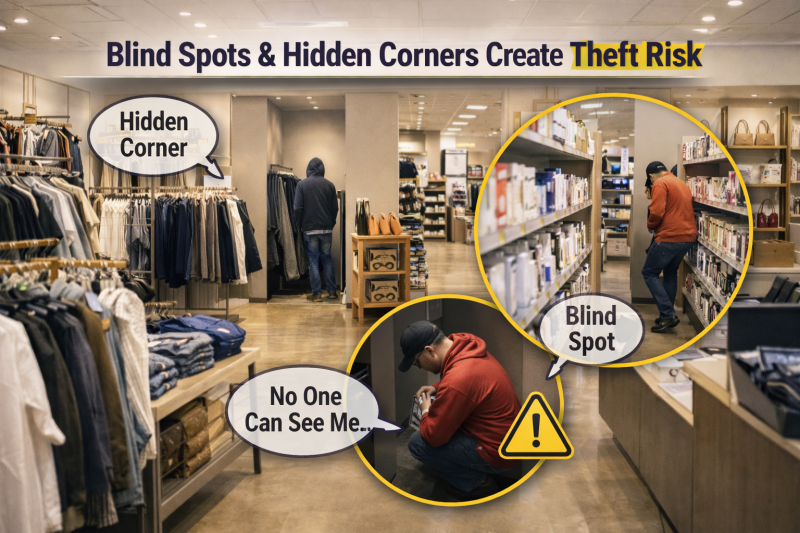
High-value products also require thoughtful placement within the store. Items that are expensive, small, and easy to conceal should never be placed in low-visibility areas or near exits. Instead, these products should be positioned within direct sightlines of employees or in areas with consistent customer traffic. This does not necessarily mean locking products behind glass, but rather designing the space so that theft becomes more difficult to attempt unnoticed.
Another commonly ignored strategy is the use of visual merchandising as a psychological deterrent. Clean, well-organized stores signal that inventory is closely managed and monitored. When displays appear chaotic or poorly maintained, it can unintentionally signal that the store lacks control over its inventory. Shoplifters often look for environments where they believe staff are less attentive.
Retail theft prevention is not solely a security issue — it is fundamentally a store design and operational strategy. Cameras and security tags can support prevention efforts, but they cannot replace strong merchandising structure and store layout visibility. Retailers who ignore these foundational elements often find themselves spending more and more on security technology while theft continues to rise.
Ultimately, the most effective theft prevention strategy is one that integrates store layout, merchandising structure, employee positioning, and customer traffic flow. When these elements work together, the store environment itself discourages theft before it even happens. Instead of reacting to theft after it occurs, retailers can design spaces that make shoplifting significantly harder to execute in the first place.
Add comment
Comments