Retail logistics is undergoing a quiet but significant transformation. While most discussions around retail focus on pricing, promotions, or store performance, one of the most powerful competitive advantages today is something customers rarely see: the delivery network behind the order. Recent developments show that Amazon is continuing to expand its own logistics infrastructure while reducing its reliance on traditional carriers such as the United States Postal Service. This shift signals a larger structural change in how retail fulfillment works and what it takes to compete in modern commerce.
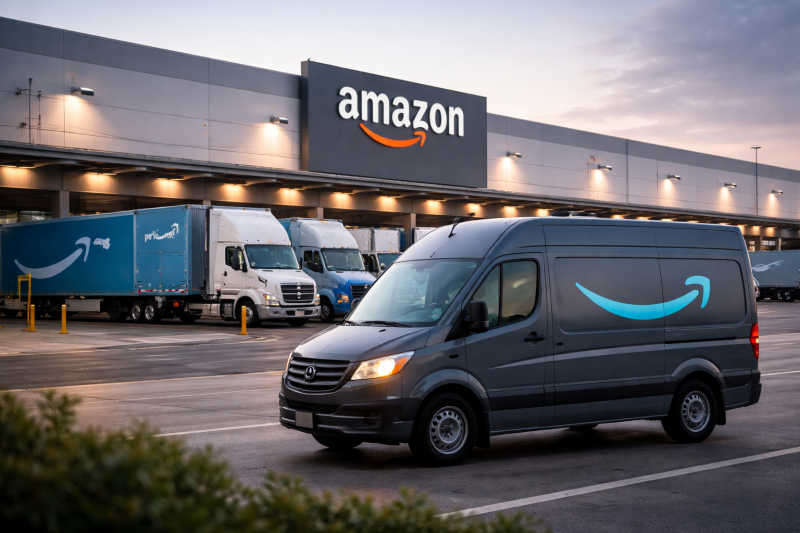
For years, Amazon relied heavily on carriers like USPS, UPS, and FedEx to move packages across the country. These partnerships helped Amazon scale rapidly during its early years of e-commerce growth. However, as online retail exploded and customer expectations shifted toward faster delivery speeds, Amazon began investing billions into building its own delivery ecosystem. Warehouses, regional fulfillment centers, delivery vans, cargo planes, and sophisticated routing technology have gradually turned Amazon into one of the largest logistics operators in the world.
The Shift Away from Traditional Delivery Partners
Recent reporting indicates that Amazon is reducing the volume of packages handled by USPS as the company continues expanding its internal delivery network. While USPS will still play a role in Amazon’s logistics operations, the reduction highlights a broader strategy: Amazon wants greater control over the last mile of delivery.
The last mile — the final stage where packages reach the customer’s doorstep — is often the most expensive and operationally complex part of the entire supply chain. By building its own delivery infrastructure, Amazon can control delivery speed, reduce long-term costs, and optimize routes in ways that traditional carriers cannot easily replicate.
This strategy also gives Amazon something even more valuable than cost savings: operational flexibility. When retailers rely entirely on third-party carriers, they are dependent on external schedules, capacity constraints, and pricing changes. Amazon’s vertically integrated approach removes many of these limitations.
Logistics Has Become Retail’s Hidden Battleground
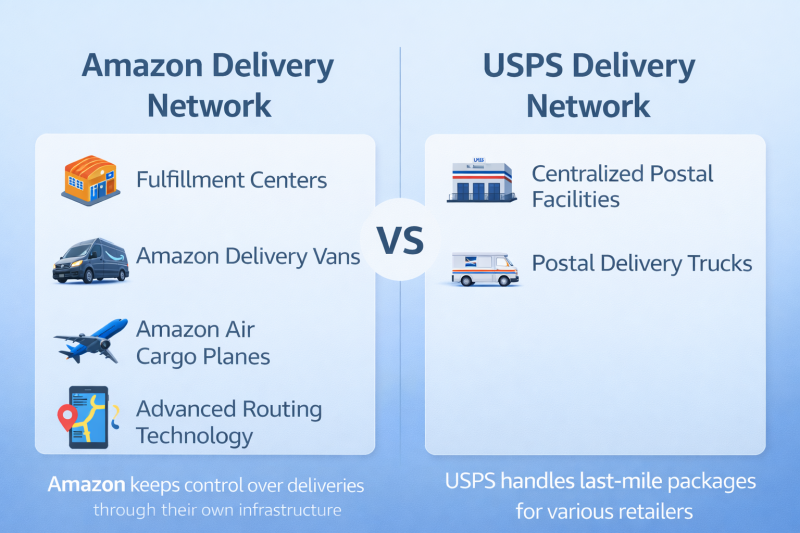
Many people still think of Amazon primarily as an online marketplace. In reality, it has quietly evolved into something much larger: a logistics powerhouse that rivals traditional shipping companies in scale and efficiency.
Amazon’s delivery network now includes:
• Hundreds of fulfillment centers and sorting facilities
• A massive fleet of delivery vans through its Delivery Service Partner program
• Cargo aircraft operating under Amazon Air
• Advanced routing software and predictive inventory systems
This infrastructure allows Amazon to position inventory closer to customers, reducing the distance packages must travel. The result is faster delivery speeds, often within one or two days — and in some markets, even same-day delivery.
For competing retailers, this creates an enormous challenge. Speed has become a core component of customer experience. When shoppers receive orders quickly and reliably, their expectations change permanently. Retailers that cannot match these delivery timelines risk losing customers, even if their products and pricing are competitive.
What This Means for the Future of Retail Supply Chains
Amazon’s logistics expansion is forcing the entire retail industry to rethink supply chain strategy. In the past, supply chains were primarily designed around efficiency and cost reduction. Today, they must also support speed, visibility, and flexibility.
Many retailers are responding by investing in new fulfillment strategies such as micro-fulfillment centers, ship-from-store models, and regional distribution hubs. These approaches aim to reduce delivery times without requiring the massive capital investment needed to replicate Amazon’s network.
However, even these strategies come with operational complexity. Inventory must be carefully positioned across multiple locations, and retailers must maintain accurate stock visibility to avoid fulfillment errors.
This is where supply chain technology, inventory management systems, and data analytics are becoming critical tools for retailers trying to stay competitive.
Why Smaller Retailers Face the Biggest Challenge
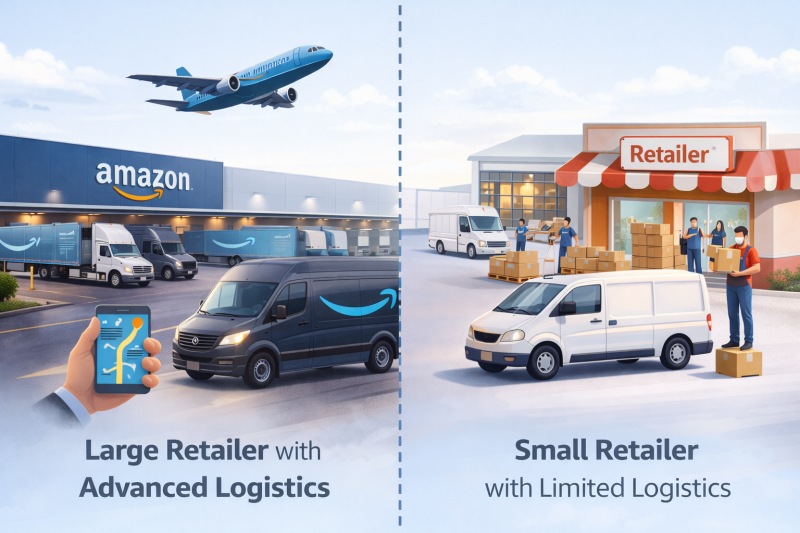
Large national retailers have the resources to invest in logistics infrastructure and supply chain optimization. Smaller retailers, however, often face a much tougher reality. Building a delivery network similar to Amazon’s is simply not financially feasible for most businesses.
Instead, smaller retailers must focus on strategic alternatives. These can include partnerships with third-party logistics providers, regional fulfillment strategies, or focusing on differentiated customer experiences that do not rely solely on delivery speed.
For many retailers, the goal is not to out-Amazon Amazon — but to compete in ways that leverage their strengths, whether that means curated product assortments, in-store experiences, or specialized expertise.
The Bigger Picture: Amazon Is Becoming a Logistics Company
The reduction in Amazon’s reliance on USPS is more than just a supply chain adjustment. It reflects a long-term strategy where Amazon is evolving beyond retail into a full-scale logistics platform.
Just as Amazon Web Services transformed the cloud computing industry, Amazon’s logistics network could eventually become an infrastructure layer used by other companies. If that happens, Amazon would not only dominate e-commerce but also play a central role in how goods move through the broader economy.
This possibility highlights why logistics is becoming one of the most strategically important areas in retail. The companies that control fulfillment networks increasingly control the customer experience as well.
Final Thoughts
Retail competition is no longer limited to product assortment, pricing strategies, or store locations. Behind the scenes, supply chains and delivery infrastructure are shaping the future of the industry in profound ways.
Amazon’s continued expansion into logistics — and its reduced reliance on traditional carriers — shows how critical control over fulfillment has become. For retailers trying to compete in today’s environment, understanding the strategic role of logistics may be just as important as understanding merchandising or marketing.
The companies that succeed in the next era of retail will not simply sell products better. They will move products better.
Add comment
Comments