Retail’s Biggest Data Blind Spot
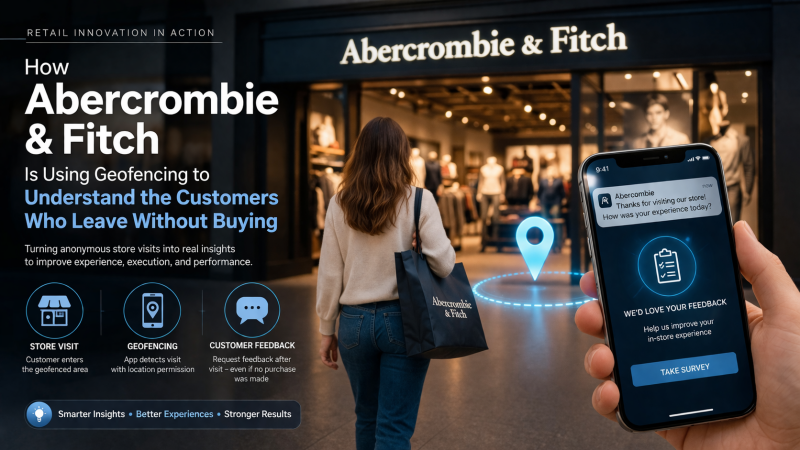
For decades, retailers have built their analytics around transactions. Sales reports, loyalty programs, and digital analytics reveal enormous detail about customers who complete purchases. However, one of the most important groups of shoppers has always remained largely invisible in retail data: the customers who walk into a store, browse products, and ultimately leave without buying anything.
Retailers rarely have reliable insight into why these customers leave. A shopper may spend fifteen minutes exploring merchandise, comparing items, and considering a purchase, yet from a data perspective that visit effectively disappears once they walk out the door. This gap means retailers are often forced to guess why potential customers fail to convert into buyers.
That blind spot is exactly what Abercrombie & Fitch is attempting to address.
How Geofencing Connects Digital Data to Physical Stores
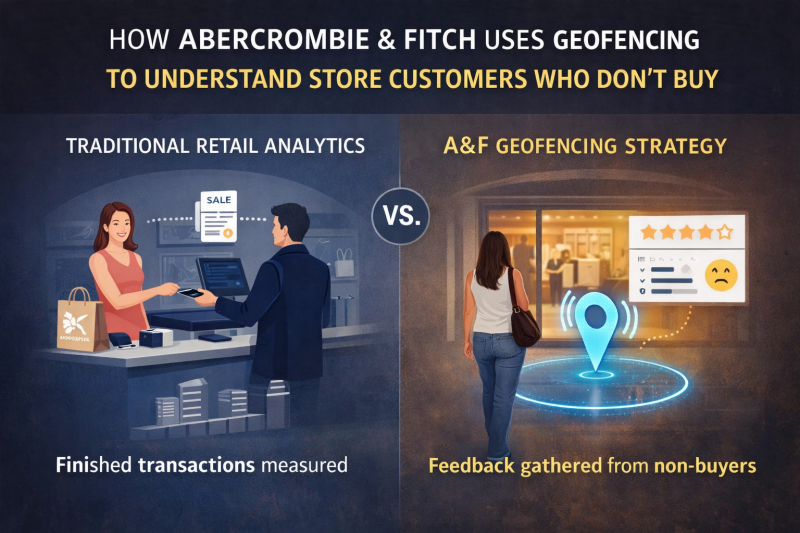
The retailer has begun experimenting with geofencing technology connected to its mobile app. Geofencing creates a virtual boundary around a store location. When customers who have the brand’s mobile app installed enter that boundary and have location permissions enabled, the company can detect the visit.
After the customer leaves the store, the retailer can follow up with a request for feedback about the in-store experience. This allows the brand to ask customers about their visit even if they never completed a purchase.
This approach represents a meaningful shift in how physical retail experiences are measured. Instead of only analyzing what customers bought, the company can begin understanding what happened during the visit itself. Retailers can learn whether customers struggled to find products, felt pricing was too high, or simply did not connect with the store experience.
Understanding the Customers Who Almost Bought
One of the most valuable insights in retail often comes from the customers who nearly purchased something but ultimately decided against it. These shoppers already showed interest by entering the store and browsing merchandise. Something during the experience prevented them from converting into buyers.
Feedback collected through geofencing can reveal the friction points that led to that decision. A shopper may have been unable to find their size, struggled to locate a product category, or felt overwhelmed by the layout of the store. In other cases, customers may simply feel that the merchandise does not stand out enough to justify the purchase.
Understanding these moments provides retailers with insights that traditional sales reports cannot capture. Purchase data shows what sold, but it rarely explains why certain customers chose not to buy anything at all.
What This Means for Store Operations
For store managers and retail operators, this type of feedback can become extremely valuable. Many lost sales are not the result of major strategic mistakes but rather small operational problems that accumulate over time.
A display might block visibility of key products. A planogram might not match the inventory actually available in the store. A shelf might appear full but lack the specific sizes customers are looking for. In some cases, the layout itself may unintentionally guide customers away from important product categories.
These kinds of operational issues are often invisible when retailers rely solely on sales reports. A product that performs poorly might appear to have weak demand when the real problem is simply that customers could not easily find it or evaluate it.
By hearing directly from store visitors who leave without buying, retailers gain a clearer picture of how execution inside the store affects customer decisions.
The Shift Toward Full Customer Journey Analytics
The strategy also reflects a broader change happening across retail analytics. Retailers are increasingly focusing on understanding the entire customer journey rather than only measuring completed transactions.
E-commerce platforms have long tracked customer behavior in detail, monitoring clicks, product views, and abandoned shopping carts. Physical stores have traditionally lacked this level of visibility, making it harder to diagnose where customers disengage.
Geofencing technology begins to close that gap by connecting digital signals with real-world store visits. Retailers can begin analyzing how customers interact with stores, not just how they behave at the checkout counter.
Why the Customers Who Leave Matter Most
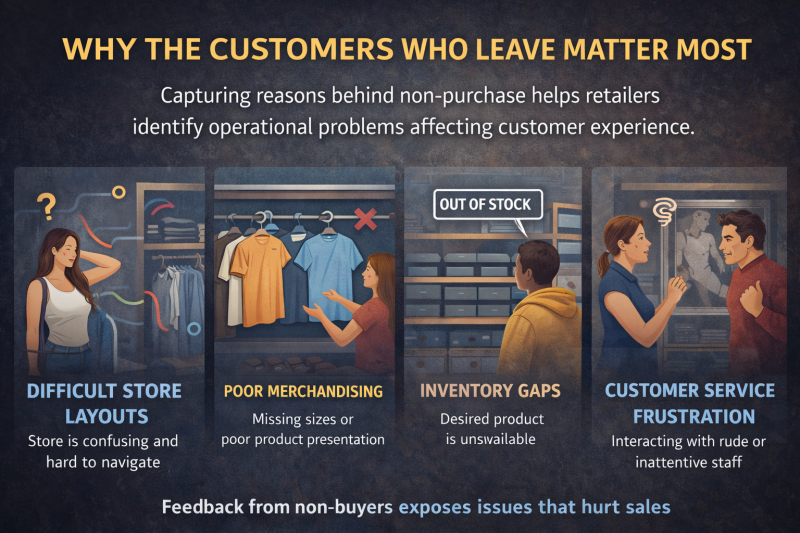
The most important takeaway from this strategy is not the technology itself but the insight behind it. Retailers have spent years studying customers who buy, yet the customers who leave without purchasing often provide the most valuable information.
These shoppers represent missed opportunities. They were interested enough to enter the store and explore the merchandise, which means the retailer came very close to making a sale. Understanding why that sale did not happen can reveal weaknesses in merchandising, store design, product availability, or pricing perception.
Retailers that learn how to capture and analyze these insights will gain a powerful advantage in improving store performance.
The Future of Store Analytics
Experiments like the one being conducted by Abercrombie & Fitch highlight an important shift in how retailers think about data. The next generation of retail analytics will not focus solely on sales results but on the entire experience customers have inside stores.
As technology continues to connect digital tools with physical environments, retailers will gain deeper visibility into how customers navigate stores, interact with products, and ultimately decide whether to make a purchase.
The retailers that succeed will be the ones that treat those insights as an opportunity to refine store execution, improve merchandising strategies, and design shopping experiences that convert curiosity into sales.
Add comment
Comments