
Retail is entering another one of those moments where the industry feels split between two completely different futures. On one side, you have traditional retail companies trying to become leaner, faster, and more digitally efficient. On the other, you have resale platforms and community-driven commerce models gaining momentum because shoppers are changing how they spend money. This week, those two realities collided in a way only modern retail could produce.
The biggest headline came from GameStop CEO Ryan Cohen and his aggressive attempt to acquire eBay in a deal reportedly valued at roughly $56 billion. At the same time, resale platform ThredUp reported another strong quarter, showing meaningful growth in active buyers and continued momentum in secondhand commerce.
At first glance, those stories may seem unrelated. One is a meme-stock CEO attempting one of the boldest acquisitions retail has seen in years. The other is a resale company quietly improving its customer base and operational performance. But together, they reveal something much larger happening across retail and e-commerce.
The industry is shifting away from traditional retail identity and toward ecosystem-driven commerce.
That distinction matters more than most retailers realize.
Ryan Cohen Isn’t Really Buying eBay for eBay
The reaction to the proposed acquisition has mostly focused on whether the deal is realistic. Many analysts immediately questioned how GameStop could realistically absorb a company much larger than itself. The financing structure, debt concerns, and shareholder dilution became immediate talking points.
But focusing only on the financial side misses the strategic signal behind the move.
Ryan Cohen understands something many retailers still underestimate: communities now matter more than storefronts.
Traditional retail was built around inventory distribution. The winning companies controlled shelf space, vendor relationships, and physical locations. Modern commerce works differently. The winners increasingly control engagement, resale ecosystems, collectibles, creator-driven demand, loyalty loops, and digital attention.
That is exactly why this proposed acquisition actually makes strategic sense conceptually, even if execution would be extremely difficult.
GameStop already sits in the middle of enthusiast culture. Gaming, collectibles, trading cards, hardware, and resale all naturally overlap. eBay already dominates large portions of peer-to-peer collectible and enthusiast commerce. Combining those ecosystems theoretically creates a massive transactional network centered around hobbyist spending behavior.
This is not about selling video games anymore.
It is about owning a marketplace where people buy, flip, trade, collect, authenticate, livestream, and participate socially around products.
That is a very different retail model than what existed even five years ago.
Retail Is Quietly Moving Toward “Participation Commerce”
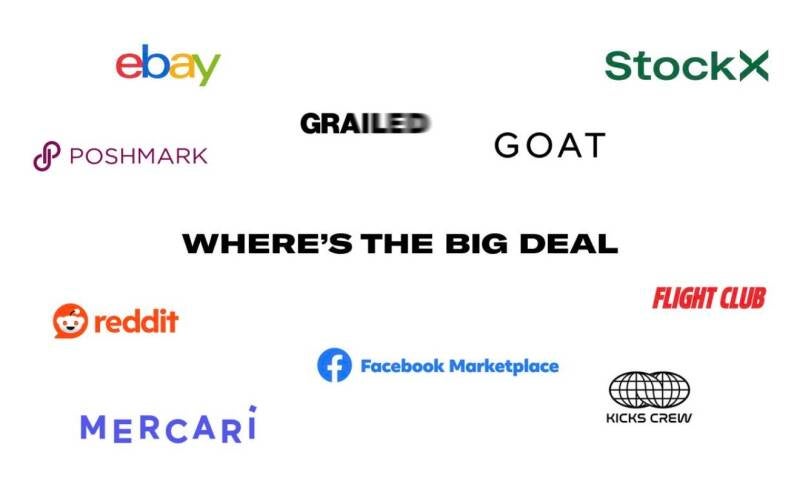
One of the biggest shifts happening in retail right now is the rise of what could be called participation commerce.
Customers no longer just buy products. They participate in ecosystems.
Sneaker culture helped accelerate this shift years ago. Buyers became resellers. Collectors became content creators. Consumers became marketplace participants. The transaction stopped being the end of the journey and became part of a larger cycle.
That same behavior now exists across fashion, collectibles, luxury goods, electronics, trading cards, vintage apparel, and even home décor.
This is why resale keeps growing despite economic uncertainty.
Platforms like ThredUp continue gaining traction because shoppers increasingly care about flexibility, value recovery, and product circulation rather than simple ownership. According to the company’s recent earnings report, active buyers increased 25% year over year to a record 1.7 million. Revenue and gross profit also increased 15%.
Those numbers matter because they show resale is no longer behaving like a niche secondary market.
It is becoming a normalized retail behavior.
Consumers are now far more comfortable purchasing secondhand items, rotating wardrobes more frequently, and using resale as part of their budgeting strategy. Younger consumers especially view resale platforms less as discount marketplaces and more as standard shopping channels.
That fundamentally changes how retailers should think about inventory lifecycle.

Why Traditional Retailers Should Pay Attention
Many retailers still treat resale as an external threat instead of integrating it into their own ecosystem strategies.
That approach is becoming increasingly dangerous.
The retailers winning right now are the ones building longer customer engagement cycles instead of relying solely on first-time purchases. That can include loyalty ecosystems, buyback programs, authenticated resale channels, trade-in systems, creator partnerships, or marketplace integrations.
Even large retailers are moving in this direction because inventory monetization no longer ends at checkout.
The product now has multiple value stages.
A sneaker can sell at launch, resell twice, appear in livestream commerce, become content on TikTok, and eventually cycle through resale marketplaces again. Retailers that insert themselves into more stages of that lifecycle gain far more long-term value than retailers focused only on initial sell-through.
This is one reason why eBay remains strategically valuable despite being viewed by some investors as an aging marketplace. The company still sits at the center of massive transaction volume across collectibles, refurbished products, sneakers, trading cards, and enthusiast-driven categories.
Those categories happen to align almost perfectly with the behavioral trends dominating younger consumer spending.

The Viral Factor Is Becoming Part of Retail Strategy
Another interesting part of this story is how much attention the proposed acquisition generated through internet culture itself.
The CNBC interview involving Ryan Cohen became widely discussed online. His decision to list personal items on eBay while publicly talking about acquiring the platform created an almost surreal mix of corporate finance and meme marketing.
Ten years ago, this would have been viewed as unprofessional corporate behavior.
Today, it generates engagement.
That may sound trivial, but attention has become one of the most valuable currencies in modern retail. Companies that understand internet behavior, community participation, and viral storytelling often outperform companies still relying on conventional brand communication.
Retail increasingly overlaps with entertainment.
The lines separating shopping, content, memes, livestreaming, and social participation continue to blur. Younger consumers often discover products through creators before they ever encounter official advertising campaigns. Communities now influence product value as much as the products themselves.
That creates both opportunity and instability.
The companies that adapt early can build incredibly loyal ecosystems. The companies that fail to understand these cultural shifts risk becoming operationally efficient but emotionally invisible.

Resale Growth Is Also a Warning Sign About Consumer Spending
The strong quarter from ThredUp also reflects broader economic behavior.
Consumers are becoming far more selective with discretionary spending. Inflation pressures and economic uncertainty continue affecting purchasing decisions across retail. Resale platforms benefit in those environments because they combine affordability with perceived sustainability and discovery-driven shopping experiences.
But there is another layer here retailers should not ignore.
Consumers are increasingly trying to extract more value from every purchase they make.
That changes how people evaluate products entirely.
A shopper buying a sneaker today may already be thinking about resale value before checkout. A fashion buyer may justify a purchase because the item can later be resold. Consumers increasingly think in terms of liquidity instead of pure ownership.
Retailers that understand this psychology can design smarter merchandising strategies, inventory positioning, and customer engagement models.
Retailers that ignore it may continue seeing weaker customer loyalty over time.
The Future of Retail May Look More Like a Marketplace Than a Store
The biggest takeaway from all of this is not whether the acquisition actually happens.
The bigger takeaway is that the future retail winners may no longer look like traditional retailers at all.
The companies gaining momentum are increasingly hybrid ecosystems combining commerce, resale, digital engagement, community participation, and marketplace functionality.
That is where the industry is moving.
Physical retail still matters. Stores still matter. Merchandising still matters. But the role of retail is evolving from simply displaying products to facilitating ongoing participation around products.
That shift changes everything from store layouts to inventory strategy to digital operations.
And whether people love or hate the idea, Ryan Cohen may be one of the few retail executives openly betting on that future in a very public way.
Add comment
Comments