For years, consumer electronics retailers have competed in a world where prices gradually fall and new technology becomes cheaper over time. Televisions get larger while costing less, laptops become faster at lower prices, and smartphones continuously deliver more power for the same price point. But that dynamic may be starting to shift.
This week, electronics retailer Best Buy reported earnings that beat expectations in some areas but also revealed a growing challenge for the industry. While the company managed to control costs and stabilize profits, a new pressure is emerging in the background: a global shortage of computer memory that could push electronics prices higher in the coming years.
The cause is not a typical supply chain disruption. Instead, it is the explosive demand created by artificial intelligence infrastructure. Data centers powering AI systems are consuming enormous amounts of memory chips, leaving fewer available for consumer devices like laptops, smartphones, and gaming hardware.
For retailers like Best Buy—and for the broader electronics retail industry—this raises an important question: what happens when the cost of technology starts going up instead of down?
Why It Is Happening
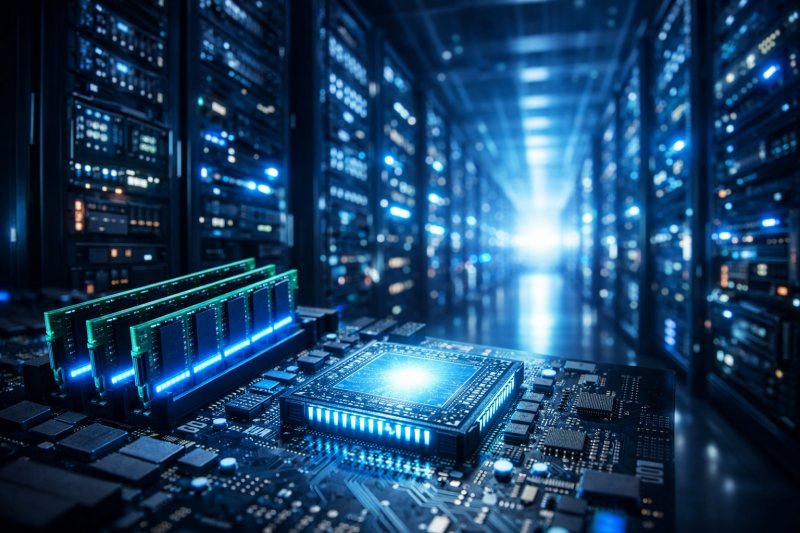
The current memory shortage is largely being driven by the explosive expansion of artificial intelligence infrastructure. AI models require enormous computing power, which in turn depends heavily on advanced memory chips. As technology companies race to build massive data centers to support AI workloads, demand for these chips has surged.
This demand has redirected manufacturing capacity toward high-performance memory designed for AI systems rather than consumer electronics. The result is a tightening supply of DRAM and NAND chips used in everyday devices.
Unlike previous chip shortages caused by logistical disruptions, the current situation reflects a structural shift in technology investment. Artificial intelligence is becoming one of the most capital-intensive industries in the world, and it consumes massive quantities of memory hardware.
In practical terms, this means the same chips used to power a laptop or smartphone may now be competing with billion-dollar AI data centers for supply.
The ripple effects are already appearing across the technology industry. Some manufacturers have begun raising prices for certain devices, and analysts expect additional increases if memory costs continue climbing.
For consumer electronics retailers, this creates a challenging environment where product costs rise even as demand remains uncertain.
What This Means for Retail
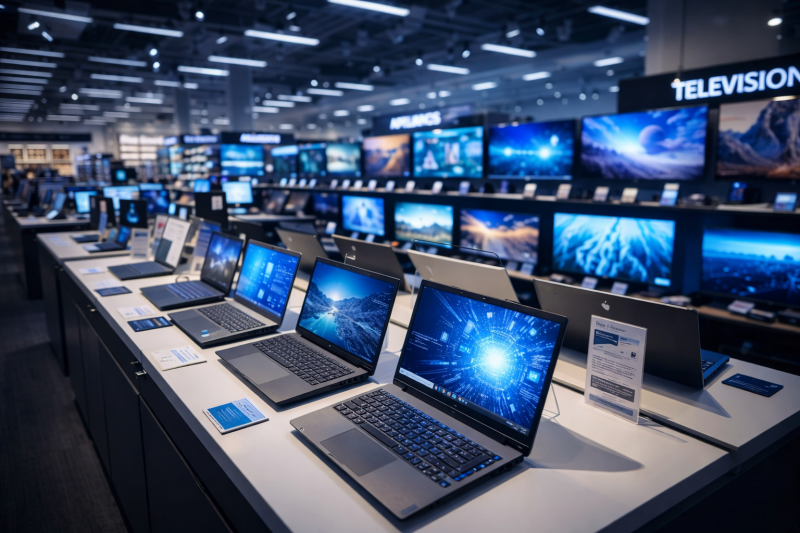
Electronics retail has traditionally been built on a predictable economic pattern: technology improves while prices fall. Retailers rely on this cycle to encourage consumers to upgrade devices regularly. When televisions become cheaper and more advanced each year, consumers are more likely to replace older models.
If component costs begin pushing prices upward, that pattern changes.
Higher prices could slow upgrade cycles for laptops, smartphones, and other electronics. Consumers may hold onto devices longer, delaying purchases until prices stabilize. For retailers like Best Buy, that could reduce sales volume in certain categories.
Retailers may respond by shifting merchandising strategies toward accessories and complementary products that carry higher margins and lower manufacturing complexity. Products such as headphones, smart home devices, gaming peripherals, and service offerings could play a larger role in the sales mix.
Another possible outcome is a greater emphasis on experiential retail. When high-priced electronics require more justification for consumers, physical stores become important environments for demonstrating value, educating customers, and showcasing technology in ways that online listings cannot.
What Could Happen Next
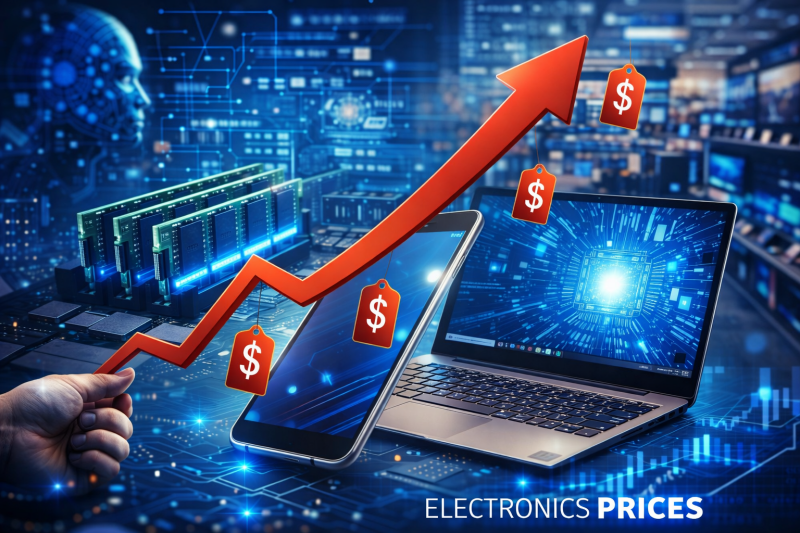
If the memory shortage continues into the coming years, the electronics industry could face a period of structural adjustment. Manufacturers may raise prices to offset rising component costs, while retailers adapt merchandising strategies to maintain profitability.
Some analysts expect the supply imbalance to persist for several years as AI infrastructure continues expanding worldwide. In that scenario, consumer electronics could experience a gradual shift toward higher average selling prices and longer upgrade cycles.
For retailers, the challenge will be balancing affordability with innovation. Stores will need to carefully curate product assortments, emphasize value-driven categories, and create in-store experiences that justify premium technology purchases.
Best Buy’s recent earnings may therefore represent more than just a routine financial update. They offer an early glimpse into a broader transformation taking place across the electronics industry.
The rapid rise of artificial intelligence is reshaping the technology supply chain—and retail may soon feel the effects on the sales floor.
What Retailers Should Take Away From This
The potential memory shortage highlights how quickly shifts in the technology industry can ripple through retail. When upstream supply chains change, retailers often feel the effects months later through pricing pressure, product availability, and shifting consumer demand. For electronics retailers and brands alike, this means merchandising strategies, assortment planning, and pricing decisions may need to adapt quickly if component costs continue rising.
Need help optimizing your retail merchandising strategy?
I help retailers improve store layouts, product placement, and merchandising execution to increase in-store conversion and sales.
Explore my retail consulting services or download practical merchandising templates designed for store managers and retail operators.
Add comment
Comments