What Bjørn Gulden’s contract extension tells us about retail turnarounds, investor pressure, and the long road back to brand stability.
Adidas extends CEO Bjørn Gulden’s contract through 2030 as the company continues its turnaround strategy.
In retail, leadership changes often signal trouble. But sometimes the opposite happens — a company doubles down on the leader guiding its recovery.
That is exactly what Adidas just did.
The company announced it is extending CEO Bjørn Gulden’s contract through 2030, a move that signals confidence in the strategy that has been reshaping the brand over the past two years. The extension comes as Adidas reports strong revenue growth and continued momentum in several product categories, but it also arrives at a moment when investors remain cautious about the company’s long-term profitability.
To many observers, the news may seem routine: a successful CEO stays in place longer. But in retail, these decisions rarely happen without deeper strategic implications. Leadership continuity during a turnaround can reveal just how fragile — or promising — a company’s recovery really is.
Adidas’ decision to extend Gulden’s contract is not just about rewarding recent performance. It is about stabilizing a brand that only recently emerged from one of the most disruptive periods in its history.
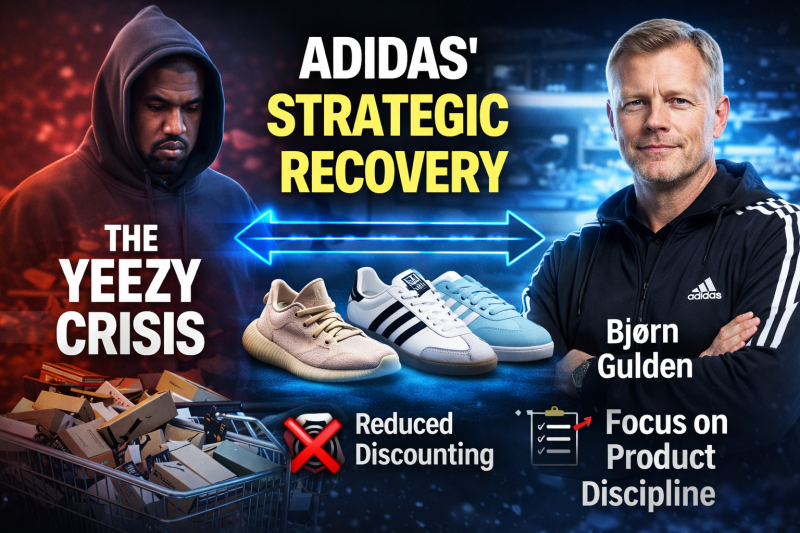
Adidas’ recovery strategy focuses on product discipline, reducing discounting, and rebuilding core footwear franchises.
What Happened
Adidas recently announced that Bjørn Gulden will remain CEO through 2030, extending his leadership several years beyond his original contract.
The extension follows a period of strong operational recovery for the company. Adidas reported record revenue in 2025, approaching €25 billion, and has regained significant momentum after a turbulent few years that saw the company struggle with excess inventory, declining profitability, and brand confusion.
Much of that instability began after the collapse of the company’s Yeezy partnership with Kanye West. The termination of that relationship in 2022 created both a financial and merchandising crisis. Yeezy products had generated billions in revenue, and the sudden halt left Adidas with large volumes of unsold inventory and a significant gap in its product strategy.
When Gulden took over as CEO in 2023, the company faced a difficult balancing act: clear the Yeezy inventory without damaging the brand, rebuild consumer excitement around core products, and restore profitability without relying heavily on discounting.
Over the past two years, Adidas has focused on tightening product assortments, revitalizing classic footwear franchises like Samba and Gazelle, and rebuilding its credibility with both consumers and retailers. These efforts have helped stabilize the company’s sales and restore growth in several markets.
However, despite the revenue improvements, Adidas recently warned investors that profitability in the coming year may fall short of expectations. External pressures, including tariffs and global economic uncertainty, are expected to impact operating margins. The market reacted cautiously, highlighting the gap between operational progress and investor expectations.
In this context, extending Gulden’s contract is not simply a reward for past performance. It is a signal that Adidas believes its recovery strategy is still unfolding — and that changing leadership now could jeopardize that progress.
Why It Happened
Retail turnarounds are rarely quick. They often take years of consistent strategy, disciplined merchandising, and patient execution.
Adidas’ decision to extend Gulden’s contract reflects the reality that the company’s recovery is still in its early stages.
When companies attempt to rebuild their brand and operational stability, leadership continuity becomes one of the most important assets they can maintain. A change in leadership can disrupt strategy, confuse employees, and send mixed signals to investors and partners. By extending Gulden’s contract well into the future, Adidas is attempting to remove that uncertainty.
The move also reinforces the strategic direction Gulden has been pushing since his arrival.
Instead of chasing rapid growth through aggressive product launches or heavy discounting, Adidas has been focusing on restoring discipline to its merchandising strategy. The company has reduced excess inventory, emphasized fewer but stronger product franchises, and prioritized sustainable brand momentum over short-term spikes in demand.
This approach reflects a broader lesson that many retail companies eventually learn: growth built on hype and constant newness is difficult to sustain. Long-term success often comes from a smaller number of highly recognizable products that can remain culturally relevant for years.
Gulden’s leadership has aimed to reestablish that foundation for Adidas.
Extending his contract gives the company the time and stability needed to see whether that strategy can deliver lasting results.
What Will Happen Next
Adidas’ decision to commit to Gulden through 2030 suggests the company believes its turnaround is not yet complete.
Over the next several years, the company will likely continue focusing on strengthening core product franchises, improving supply chain discipline, and expanding global demand for its most recognizable footwear lines. These efforts will be crucial in maintaining momentum after the Yeezy era and rebuilding a more stable identity for the brand.
At the same time, the company will face increasing pressure to convert revenue growth into stronger profitability. Investors will be watching closely to see whether Adidas can maintain product demand while improving margins in a challenging economic environment.
External factors such as tariffs, currency fluctuations, and shifting consumer spending patterns will continue to shape the company’s financial outlook. Even a well-executed turnaround strategy can be slowed by macroeconomic pressures, making operational discipline even more important.
The biggest challenge for Adidas will be sustaining brand relevance while avoiding the cycle of overexpansion and discounting that has hurt many retail companies in the past.
If Gulden’s strategy continues to strengthen product identity and consumer loyalty, Adidas could emerge from this transition as a more focused and resilient brand. But if momentum slows or investor pressure intensifies, the long-term commitment to one leader could also place significant expectations on the company’s future performance.
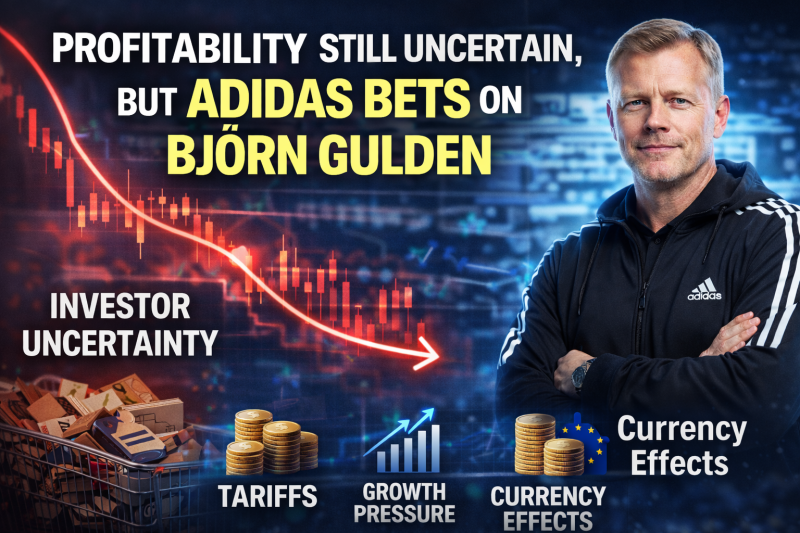
Despite strong revenue growth, investors remain cautious as Adidas faces tariffs, currency pressures, and profitability concerns.
Final Thoughts
Adidas extending Bjørn Gulden’s contract through 2030 sends a clear message: the company believes its turnaround strategy is working, but it also recognizes that rebuilding a global brand takes time.
In retail, leadership decisions often reveal more about a company’s future than its earnings reports do. By committing to a single strategic vision for the remainder of the decade, Adidas is betting that stability, discipline, and consistent execution will ultimately restore the brand’s long-term strength.
Whether that bet pays off will depend on how successfully the company can translate its operational recovery into sustained growth and profitability in the years ahead.
If you found this analysis helpful, share it with someone working in retail strategy or merchandising.
Want to Improve Your Store’s Merchandising Strategy?
Retail success rarely comes down to product alone. Store layout, product placement, and visual merchandising often determine whether customers buy — or walk past.
I help retailers and brands improve store performance through better layout strategy, merchandising planning, and product placement.
If you're working on a retail store, pop-up, or merchandising strategy and want a second set of expert eyes, feel free to reach out.
📩 Email: ctdibuono@gmail.com
Add comment
Comments