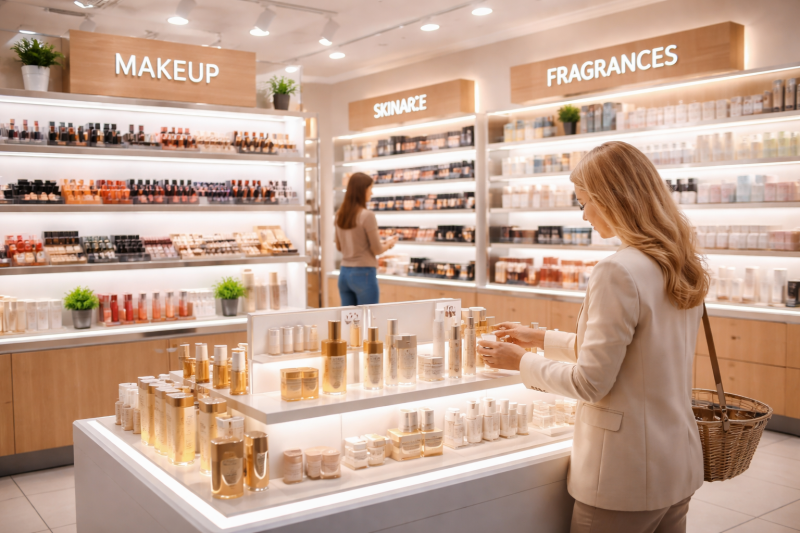
A well-structured cosmetic retail environment uses lighting, spacing, and product hierarchy to guide customer attention and create a premium shopping experience.
Walk into many cosmetic stores today and you will notice the same pattern:
shelves packed with products, promotional signage everywhere, and little clear direction on where the customer should focus first.
On paper, this looks like abundance.
In reality, it often creates hesitation.
In beauty retail, the sale is frequently won or lost before a customer even tests a product. The environment itself communicates value, trust, and desirability. When merchandising is not strategically planned, even strong brands and quality assortments can underperform.
Cosmetic shoppers are rarely purely rational decision-makers. They are influenced by emotion, discovery, aspiration, and confidence. A store that overwhelms rather than guides the customer can unintentionally reduce engagement and shorten dwell time. This is why cosmetic retail requires a smarter approach to product placement and spatial strategy.
One of the most common mistakes operators make is assuming that more visible inventory equals higher sales potential. While availability matters, visual noise can dilute product storytelling. When every shelf is densely filled, nothing stands out as important. Customers struggle to identify hero items, new launches, or premium ranges. Instead of encouraging exploration, the environment becomes cognitively exhausting.
Strategic cosmetic merchandising is about hierarchy. High-impact products should be positioned where customers naturally slow down or adjust direction. These “decision zones” allow retailers to introduce signature items, seasonal collections, or high-margin categories in a way that feels intentional rather than forced. By contrast, lower-priority items can be placed in secondary zones where customers browse more casually.
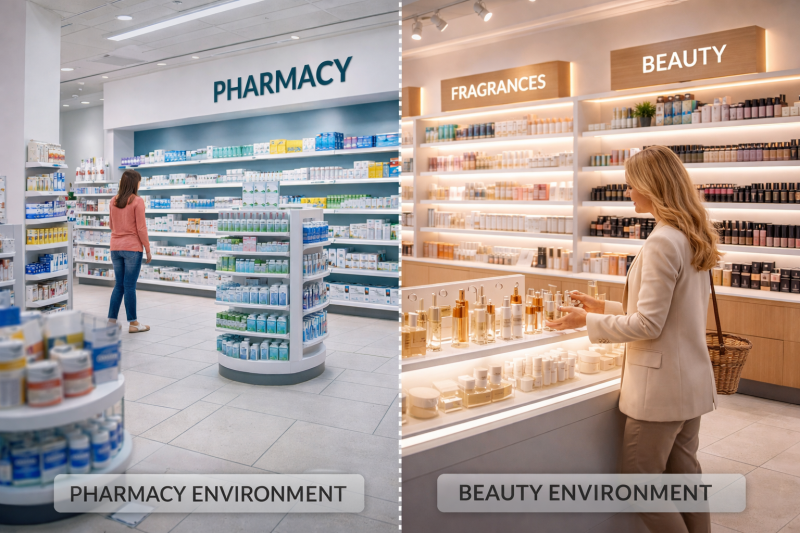
Different retail environments trigger different shopping mindsets. Cosmetic stores perform best when category zoning and atmosphere are intentionally designed to match customer expectations.
Another critical factor is category zoning. Cosmetics are not a single shopping mission. A customer looking for fragrance has a different mindset than one exploring skincare or impulse beauty accessories. When categories are blended without structure, the store loses its narrative flow. Clear zoning helps create micro-journeys within the space, allowing customers to transition from discovery to consideration to purchase with minimal friction.
Premium perception also plays a significant role in cosmetic retail performance. Overcrowded fixtures can unintentionally signal discount positioning, even when the assortment includes high-quality or luxury brands. Strategic spacing, balanced facing depth, and thoughtful display composition can elevate perceived value without changing the actual product mix. In many cases, improving presentation alone can increase conversion by strengthening brand credibility in the shopper’s mind.

Strategic merchandising zones help structure customer movement, highlight hero products, and increase impulse engagement throughout the store journey.
Customer movement patterns should also influence merchandising decisions. Cosmetic stores benefit from subtle guidance rather than aggressive direction. Sightlines, feature displays, and focal lighting can gently pull customers toward key zones. When these elements are aligned with planogram strategy, they create a cohesive experience that feels intuitive rather than engineered.
Operational discipline is equally important. Even the best layout strategy can lose effectiveness if replenishment practices lead to inconsistent presentation. Maintaining visual standards, rotating promotional highlights, and periodically refreshing impulse areas keeps the store feeling curated rather than static. This ongoing attention reinforces the perception of expertise and care, which are essential emotional triggers in beauty retail.
Ultimately, cosmetic retail success is not just about what products are offered. It is about how those products are introduced to the customer’s senses and expectations. A well-strategized merchandising approach transforms shelves into storytelling platforms and fixtures into decision-support tools.
Stores that invest time in designing their layout with intention often discover that they do not need more inventory to grow sales. They need clearer priorities, stronger visual hierarchy, and a deeper understanding of how customers experience beauty environments.
In an increasingly competitive retail landscape, thoughtful product placement is no longer a cosmetic detail. It is a foundational driver of performance.
What Cosmetic Store Operators Should Focus on First
For cosmetic retailers looking to improve performance, the starting point is rarely expanding assortment.
More often, the opportunity lies in refining how existing products are presented and experienced within the space.
Operators should begin by identifying their key visual priorities. This includes defining hero categories, reducing unnecessary shelf density, and ensuring premium or high-margin products are positioned where customers naturally pause and evaluate options. Small adjustments in spacing, fixture composition, and signage clarity can significantly improve customer confidence and engagement.
It is equally important to view the store as a guided journey rather than a static product warehouse. Thoughtful zoning, intuitive circulation paths, and intentional focal points help transform browsing into structured discovery. Over time, these environmental improvements can strengthen brand perception, increase dwell time, and ultimately support higher conversion rates without requiring major capital investment.
Retail environments that feel curated rather than crowded communicate expertise. In cosmetic retail especially, trust and aspiration are powerful purchase drivers. When layout strategy aligns with customer psychology, the store itself becomes one of the most effective selling tools available.
Add comment
Comments