Why the front of your store quietly determines traffic flow, engagement, and ultimately sales.
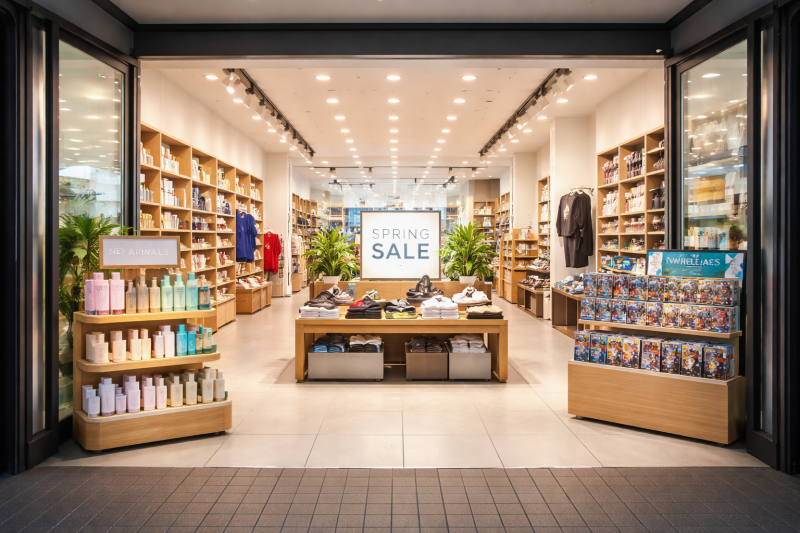
The front of the store acts as the brand’s first conversation with the customer. Clear presentation and strong visual hierarchy can immediately influence whether shoppers feel confident enough to step inside.
The first few seconds inside a retail store are rarely talked about, yet they are often the most decisive moment in the entire shopping journey. Before customers touch a product, compare prices, or speak to an associate, they are already forming a judgment. This judgment is emotional, visual, and instinctive. It happens almost automatically. In retail, this brief window can determine whether a shopper continues forward with curiosity or turns around with hesitation.
The front of the store acts as the identity of the entire business. It communicates value, clarity, and purpose without needing a single word. When customers approach an entrance, they are subconsciously asking themselves a series of questions. Does this store feel organized. Does it feel welcoming. Is it clear what this place offers. Can I quickly understand where to go. These thoughts occur within seconds, and the physical layout is what provides the answers.
Across different retail formats, the importance of the store’s front area remains consistent. In a cosmetic store, the entrance should introduce customers to trends, hero products, and visual storytelling that sparks discovery. In a sports store, the front often needs to convey energy and performance through strong product presentations and bold brand visibility. In a trading card store, the entrance may need to balance excitement with clarity, showcasing collectibles while still allowing customers to easily navigate categories. Although the products differ, the principle remains the same. The front of the store is not simply a place to display items. It is a strategic communication zone.
Many factors influence how customers respond to this initial space. Product selection plays a role because shoppers want immediate reassurance that the store carries relevant or desirable items. Reputation also influences perception, but even well-known retailers can lose engagement if the physical environment feels cluttered or confusing. Presentation is equally critical. Lighting, fixture height, signage clarity, and visual hierarchy all shape how quickly customers can process what they see. Necessity is another subtle factor. When customers are unsure whether a store can solve their immediate need, they are more likely to disengage quickly. The front layout must therefore reduce uncertainty rather than increase it.
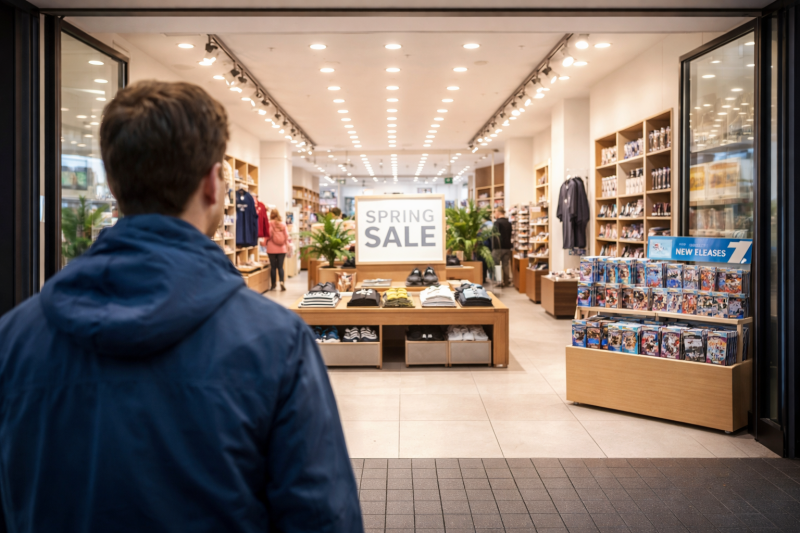
In the first few seconds, customers subconsciously assess clarity, organization, and relevance. Store layout decisions at the entrance shape whether curiosity grows or hesitation takes over.
A common mistake retailers make is treating the entrance as leftover space rather than intentional space. Overstock displays, excessive signage, or inconsistent merchandising themes can overwhelm shoppers before they even begin browsing. Instead of creating excitement, this creates cognitive friction. Customers may feel mentally tired before the shopping journey truly starts. A well-designed front area should guide rather than pressure. It should invite exploration while still establishing a clear sense of direction.
Another overlooked element is the transition zone just inside the entrance. Customers need a brief moment to adjust from the outside environment into the retail setting. If the layout forces immediate decision-making through aggressive displays or tight pathways, it can create discomfort. Strategic spacing, clear sightlines, and purposeful focal points help customers ease into the experience. When this transition is handled effectively, shoppers are more likely to slow down, engage, and move deeper into the store.
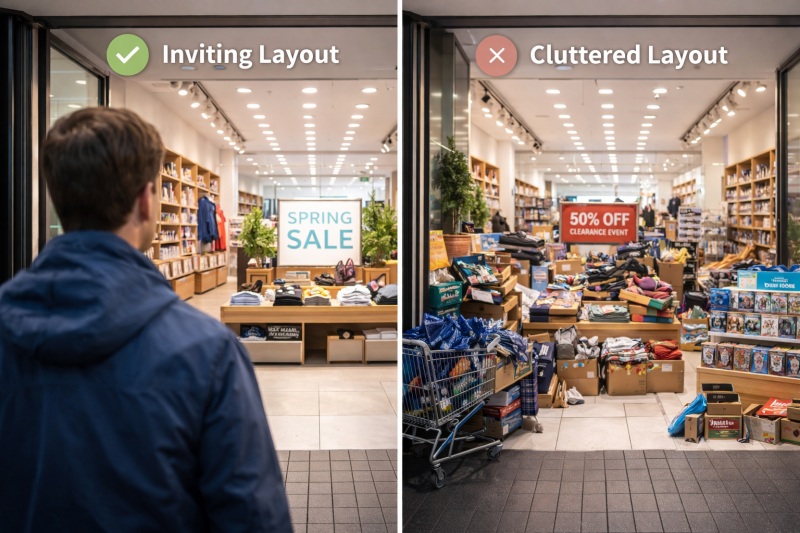
A structured, intentional entrance layout encourages exploration, while cluttered or overwhelming displays can create friction that pushes customers away before the shopping journey even begins.
Ultimately, the first seven seconds represent an opportunity rather than a risk. Retailers who understand this moment can shape perception, influence movement patterns, and increase the likelihood of conversion. The front of the store is not just about aesthetics. It is about psychology, strategy, and operational intent. When executed thoughtfully, it becomes a silent salesperson that welcomes customers, builds trust, and sets the tone for the entire visit.
In a competitive retail environment where attention spans are short and choices are endless, those first seconds matter more than ever. Stores that design their entrances with purpose are not simply improving appearances. They are actively shaping customer behavior. And in retail, behavior is what ultimately drives results.
Retail performance is shaped long before a customer reaches the checkout counter. The entrance experience sets expectations, builds confidence, and quietly guides how shoppers move, explore, and engage with products. When retailers design the front of their stores with intentional structure and clear visual communication, they create an environment that feels easier to understand and more inviting to navigate. In today’s competitive retail landscape, where shoppers have endless alternatives, the ability to capture attention and establish trust within the first few seconds can determine whether a visit turns into a meaningful shopping journey or a missed opportunity.
Add comment
Comments