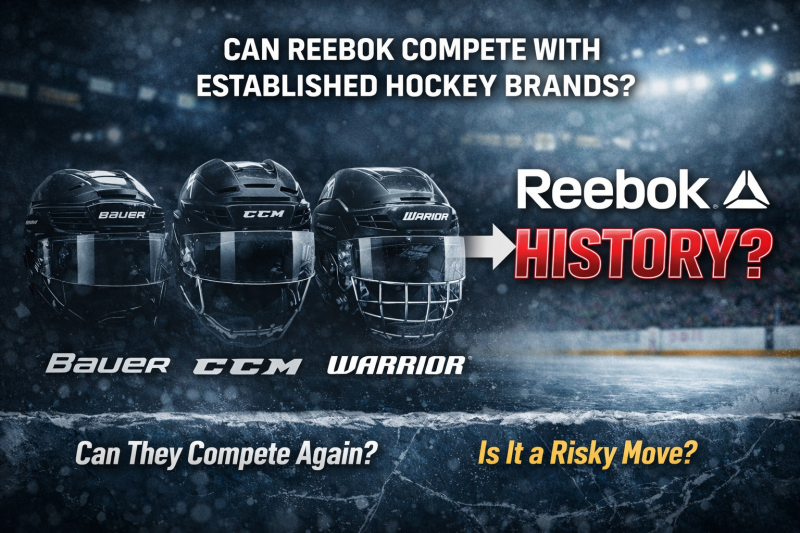
News that Reebok is exploring a move back into hockey equipment is one of the more interesting brand strategy developments in sports retail this year. The category itself is dominated by entrenched specialists, and while Reebok once had a presence in hockey, the brand’s broader retail history raises an important question: is this a strategic expansion or a risky attempt to reenter a niche that has moved on?
Hockey is not like running shoes or athletic apparel. It is a highly technical equipment market where brand credibility, product performance, and decades of trust matter more than marketing buzz. For Reebok, returning to hockey means competing against companies that never left.
Reebok’s History With Hockey
Reebok’s relationship with hockey is not entirely new. In the mid-2000s, the brand entered the space through corporate consolidation when Reebok was under the umbrella of Adidas.
During that period, Reebok became heavily associated with the National Hockey League. The brand even produced official NHL jerseys for nearly a decade, helping establish credibility within the sport.
However, Reebok’s hockey presence was never truly independent. Much of the hockey technology and equipment expertise came from legacy brands like CCM Hockey, which had decades of specialized manufacturing and player relationships.
Eventually, the industry consolidated again. CCM separated from Reebok’s corporate structure, and Reebok gradually stepped away from hockey equipment as the brand repositioned itself more toward lifestyle and training footwear.
The Hockey Market Is Controlled by Specialists
Unlike broader sportswear categories, hockey equipment has remained surprisingly stable in terms of brand leadership. A handful of companies dominate the category.
The largest players include:
- Bauer Hockey
- CCM Hockey
- Warrior Sports
These companies have something most athletic brands struggle to replicate: deep relationships with players, teams, and youth leagues. Their product development cycles are tied directly to performance feedback from professionals and amateur players.
In hockey, credibility comes from the rink, not the marketing department.
Other Brands Have Tried Similar Moves
Reebok would not be the first athletic brand to test the boundaries of specialized sports equipment.
Over the years, major companies have entered and exited equipment categories that require deep technical expertise. Even large global brands like Nike experimented with hockey gear in the past but struggled to compete against dedicated manufacturers.
The reason is simple: equipment categories are built on trust and performance history. A player buying skates or sticks is making a decision that affects safety, speed, and gameplay. That level of risk naturally favors brands with decades of credibility.
Why Reebok Might Still See Opportunity
Despite these challenges, there are reasons Reebok may believe the timing is right.
First, the brand has spent the last several years rebuilding its identity after changing ownership and repositioning within the athletic market. A return to performance sports could signal a shift away from purely lifestyle positioning.
Second, hockey participation continues to grow in certain regions, particularly youth leagues in North America and Europe. That creates opportunities for equipment innovation and brand entry points, especially in apparel and protective gear.
Finally, nostalgia can be powerful in sports retail. Older hockey fans remember Reebok’s era of NHL jerseys, and that legacy could provide an emotional bridge back into the category.
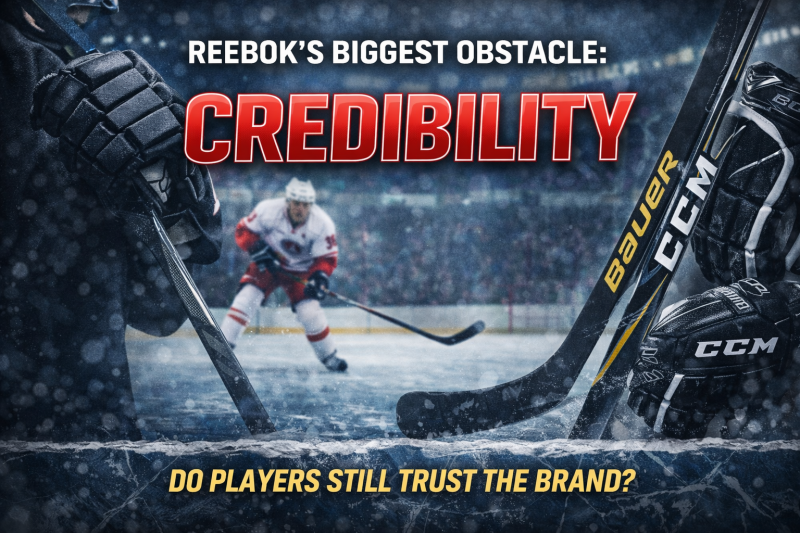
The Real Challenge: Credibility
The biggest hurdle for Reebok is not awareness. It is credibility.
Brands like Bauer Hockey and CCM Hockey have spent decades refining product technology, building athlete partnerships, and embedding themselves in hockey culture.
Reebok, by contrast, has spent much of the past decade repositioning itself in broader athletic and lifestyle categories. Jumping back into hockey means convincing players that the brand understands the technical demands of the sport again.
That is not something that can be achieved with a single product launch.
What Retailers Should Watch
From a retail strategy perspective, Reebok’s potential hockey push is worth watching closely.
If executed well, the brand could carve out space in hockey apparel, training gear, and fan merchandise before expanding into equipment. That would mirror how many brands enter specialized sports categories today.
However, if the strategy jumps directly into highly technical equipment without rebuilding credibility first, the effort could struggle to gain traction.
In niche performance markets, history matters — and so does patience.
Add comment
Comments