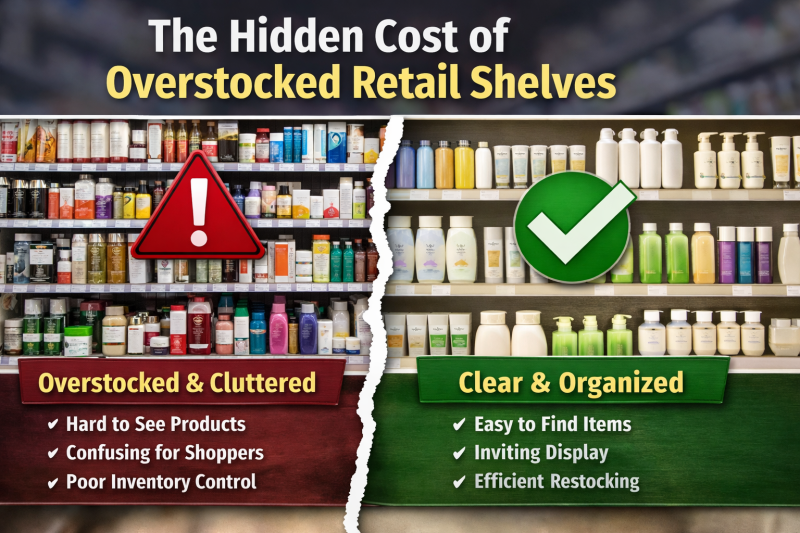
Walk into many retail stores today and you’ll see shelves packed as tightly as possible. Products stacked deep, facings squeezed together, and fixtures filled to the edge. At first glance it may look like strong inventory availability, but in reality, overstocked shelves often create the opposite effect of what retailers intend.
Instead of increasing sales, excessive product density can reduce visibility, confuse customers, and make stores harder to shop. In many cases, the problem retailers believe is “inventory management” is actually a merchandising execution issue happening directly on the sales floor.
When shelves are overfilled, the store stops communicating clearly to the customer.

When More Product Creates Less Visibility
Retail shelves work best when they guide the customer’s eyes. Strategic spacing, clear category groupings, and defined facings allow shoppers to quickly understand what they’re looking at.
Overstocked shelves disrupt that clarity.
When too many items compete for attention in the same space, nothing stands out. Products blend together, labels become harder to read, and customers spend more time searching instead of deciding. The result is slower shopping behavior and lower conversion rates.
In retail, visibility drives purchase decisions. If the product cannot be seen easily within the first few seconds of scanning a shelf, the chances of it being purchased drop significantly.
This is why strong merchandising strategies focus on controlled facings rather than maximum shelf capacity.
Overstocking Creates Operational Problems
Overstocked shelves don’t just affect customers. They also create operational inefficiencies for store teams.
When shelves are packed too tightly, restocking becomes harder and slower. Employees must move multiple products just to rotate inventory or refill facings. Items are more likely to be misplaced, and backroom stock counts become less reliable.
Ironically, shelves that are overfilled can still produce out-of-stock situations. When products are crammed together, it becomes harder for employees to notice gaps or low inventory signals.
What looks like “full shelves” often hides poor inventory visibility.
The Psychology of Shelf Space
There is a common misconception in retail that more product automatically signals abundance and encourages buying. In reality, shoppers respond better to clarity than quantity.
Well-spaced shelves help customers identify products quickly and understand the assortment being offered. Organized displays communicate confidence, quality, and ease of shopping.
Overcrowded shelves, on the other hand, can create a discount-store appearance even when products are premium. When everything is packed tightly together, the environment begins to feel chaotic rather than curated.
Retail environments that feel easy to navigate encourage customers to stay longer and explore more.

Why Strategic Merchandising Wins
The most effective stores focus on intentional product placement rather than maximum shelf capacity.
High-performing retailers prioritize key SKUs, maintain clear visual hierarchy, and use consistent facings to highlight their best-selling items. Instead of filling every inch of shelf space, they create breathing room that allows products to stand out.
This approach improves customer decision speed, increases product visibility, and makes restocking operations far easier for store teams.
Strong retail execution isn’t about fitting more items onto the shelf. It’s about helping the customer understand the shelf in seconds.
Final Thoughts
Retail success often comes down to small execution details on the sales floor. Overstocked shelves may seem like a minor issue, but they can quietly undermine product visibility, store efficiency, and customer experience.
When retailers shift their focus from “filling shelves” to “structuring shelves,” they create stores that are easier to shop, easier to manage, and ultimately more profitable.
Sometimes the most powerful change in retail isn’t adding more inventory. It’s simply giving the right products the space to be seen.
Add comment
Comments