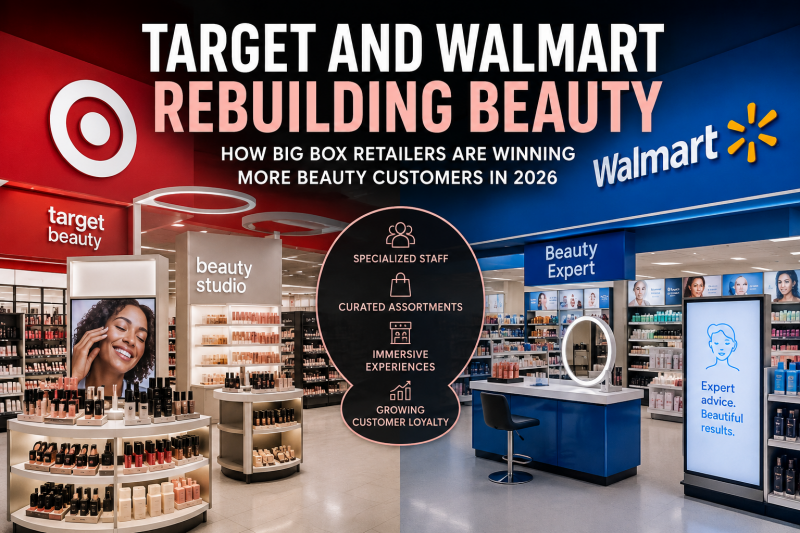
For years, specialty beauty retailers like Sephora and Ulta controlled the conversation around cosmetics, skincare, and prestige beauty shopping. Big-box retailers could compete on price and convenience, but not necessarily on experience. That gap is now starting to close, and Target and Walmart are making it clear that beauty is no longer just another aisle in the store.
Both retailers are aggressively investing in beauty during 2026, but what makes this shift interesting is that it goes far beyond simply adding more products. The real strategy is operational. They are redesigning staffing models, expanding assortments, improving store presentation, and turning beauty into a category that feels curated instead of transactional.
Walmart’s latest move may be one of the clearest examples of how retail is changing at the store level. After testing a dedicated “Beauty Expert” associate role in select locations, the company is now expanding the position to hundreds of stores across the country. Instead of treating beauty as a shared-responsibility department, Walmart is assigning specialized associates focused entirely on the category.
That decision says a lot about where mass retail is heading. Beauty shoppers typically expect guidance, discovery, and interaction. They want recommendations, trend awareness, and confidence before purchasing products. Specialty retailers built loyalty around that experience years ago. Walmart now appears to understand that improving labor allocation inside the department can directly improve customer engagement and conversion.
Target is approaching the category from a slightly different angle, but the objective is similar. The retailer is expanding its “Target Beauty Studio” concept to hundreds of stores while introducing dozens of new beauty brands and creating a more immersive presentation throughout the department.
This reflects a larger trend happening across retail right now. Consumers increasingly expect stores to combine convenience with experience. Simply carrying products is no longer enough. Retailers now have to create environments that feel engaging, curated, and visually inspiring, even in mass-market formats.
What makes beauty especially important is that it drives repeat traffic and emotional purchasing behavior. Unlike many commodity categories, beauty shoppers often browse, test, compare, and impulse purchase. That creates longer dwell times and higher basket-building opportunities when merchandising is executed properly.
From a merchandising strategy perspective, beauty departments are becoming mini destination zones inside the store. Lighting, adjacencies, fixture design, and staffing all influence how customers interact with the category. The retailers winning in beauty are not just filling shelves — they are creating an environment where discovery happens naturally.
This is also happening during a time when both Target and Walmart are trying to attract higher-income shoppers without alienating value-focused consumers. Walmart has already reported continued gains with higher-income households, showing that its customer mix is evolving.
That shift matters because beauty is one of the categories where premiumization can happen quickly. A customer who visits Walmart for groceries may now also purchase skincare products, cosmetics, wellness items, or trending beauty brands if the presentation feels elevated enough. The category becomes a gateway into changing overall brand perception.
Target has historically leaned into design and presentation more aggressively than Walmart, and recent earnings suggest the company’s renewed focus on style and merchandising is beginning to resonate again with shoppers. But Walmart’s operational scale and increasing investments in store modernization make this battle far more competitive than it once was.
The beauty war between Target and Walmart is not really about makeup. It is about customer perception, store experience, and long-term loyalty. Retailers are realizing that categories traditionally dominated by specialists can now become strategic growth engines inside general merchandise stores if executed correctly.
For retail operators, this shift reinforces an important lesson. Categories that encourage discovery and engagement cannot be managed with purely transactional merchandising strategies anymore. Labor, presentation, customer flow, and visual storytelling now play a direct role in sales performance.
The stores that understand this first will likely own the next phase of retail growth.
Add comment
Comments